How to Become a CRNA: Nurse Anesthetist Career Path



In This Article |
|---|
|
If you’re looking for a nursing career with one of the top salaries and more autonomy than most other nursing positions, you should take a look at how to become a CRNA (certified registered nurse anesthetist). What is a nurse anesthetist and what does a person in this role do? We’ll review the answers, plus explore the education you need, the job outlook, and the average CRNA salary, and the highest-paying states for nurse anesthesiology professionals.
CRNA Meaning: What Is a CRNA and What Does a CRNA Do?
The basic definition of a nurse anesthetist is an advanced practice registered nurse (APRN) trained and certified to administer anesthesia to patients who are undergoing medical procedures, surgery, labor and delivery, and emergency care.
A certified registered nurse anesthetist (sometimes called a nurse anesthesiologist) can also work with a multidisciplinary healthcare team — including the surgical team, anesthesia technicians, and other medical staff — to treat patients who are in chronic pain to help them improve and maintain their quality of life.
So, what is a CRNA expected to do for a patient? When working on a case, a CRNA’s scope of practice might include the following:
- Take a patient’s medical history
- Review charts to formulate an anesthesia plan
- Educate patients before and after a procedure
- Administer anesthesia during surgery or other procedures
- Monitor the patient’s vital signs
- Manage ventilators
- Assist the surgical team during an emergency
- Observe the patient after a procedure and assist in their recovery
5 Steps to Become a CRNA
Meaning to join this profession? There are many CRNA school requirements, beginning with completing a pre-nursing degree from an accredited nursing program and ending with passing a national certification exam. This is the typical process to learn how to become a CRNA.
Step 1: Become an RN
The first step for learning how to become a nurse anesthetist is earning a Bachelor of Science in Nursing (BSN) degree from an accredited four-year college or university. These programs train and qualify you for RN licensure, and there are a few different program structures and options depending on your background:
- If you have no prior degrees, a traditional BSN will take about four years to complete.
- If you hold an Associate Degree in Nursing (ADN), you can:
- Enroll in a bridge program to earn your BSN in about a year.
- Seek out ADN-to-MSN programs, which typically take three to four years.
- If you hold a non-nursing degree, you might enroll in an accelerated program to earn your BSN in less time, usually about a year.
Step 2: Gain Experience
CRNA schools require between one to three years of clinical experience in intensive care settings. The purpose of this time is for you to gain essential critical thinking, clinical reasoning, and time management skills. You’ll also learn more about managing patients on critical care meds, such as vasopressors, paralytics, and analgesics. Critical care experience will also expose you to the complexities of managing fragile patients and help you grow your confidence as a nurse.
Step 3: CRNA School
CRNAs need a doctoral degree to qualify for licensure. Once you’ve got some experience under your belt, look up CRNA programs in your area and the application process for each one’s nurse anesthetist program. You may need to take the Graduate Record Examination (GRE) and have a minimum GPA of 3.0 or higher.
There are two different types of CRNA doctoral degrees:
- Doctor of Nursing Practice (DNP with a focus in anesthesia): Offered by nursing schools, these programs prepare students with the training and clinical experience necessary to administer anesthesia across clinical settings.
- Doctor of Nursing Anesthesia Practice (DNAP): These programs are typically offered by hospitals and also train students to administer and manage anesthesia in a range of settings.
Step 4: Earn Board Certification
Once you graduate, the final step to become a CRNA is passing the National Board of Certification and Recertification for Nurse Anesthetists (NBCRNA) exam. Many states also require you to hold an unencumbered APRN license.
To maintain your credentials, you’ll need to complete continuing education regularly, though the exact requirements differ by state.
Step 5: Find Your First Role
Where will your CRNA credentials take you? Once you’re licensed, you could find CRNA jobs in a range of settings. As you prepare for applications, update your CRNA resume with your new skills and training, and polish your CRNA cover letter so that you stand out.
What Is a CRNA Skill Set?
Along with completing a nurse anesthesia program, obtaining technical training, and having job experience, you’ll need to build a strong skill set as a registered nurse anesthetist. CRNA resumes should also feature:
-
- Problem-solving skills. What do you do if a patient is having a reaction to anesthesia? How do you manage a difficult intubation? Strong clinical reasoning is an essential CRNA skill.
- Strong communication and interpersonal skills. A great CRNA can comfort a patient who is anxious about surgery, but can also communicate clearly and efficiently with staff.
- Ability to work under pressure. Nurse anesthetists need confidence and competence to handle sudden, precipitous changes in patient condition. This is one of the reasons why the process of how to become a CRNA requires job experience.
How to Become a CRNA: FAQ
How many years does it take to become a nurse anesthetist?
Depending on the state where you practice, becoming a nurse anesthetist takes from 7 to 10 years to complete the education, licensing, and certification.
What is a nurse anesthetist vs. an anesthesiologist?
You may have heard the term anesthesiologist. That title refers to a physician trained in anesthesia. A nurse anesthetist and an anesthesiologist perform the same types of tasks, but an anesthesiologist tends to work with more complicated cases in larger hospitals and supervise anesthetists on staff. Learn more about the differences between CRNAs vs. anesthesiologists and the distinctions between nurse practitioners vs. doctors.
How much do CRNAs make?
A certified registered nurse anesthetist has one of the top salaries in nursing. The average CRNA salary is $231,700 annually. Your nurse anesthesiologist salary will depend on where you work in the U.S. and what type of facility you work for. The states with the highest salaries for CRNA jobs are:
What’s the CRNA job outlook?
The profession is one of the fastest growing in nursing. According to the Bureau of Labor Statistics (BLS), the job outlook for this position will grow 10% in the next 10 years — faster than the average for all other occupations. So, if you want to know how to become a CRNA, now is a great time to investigate.
Where do CRNAs work?
You’ll find CRNAs working in a variety of settings, alongside physicians, surgeons, pain management specialists, dentists, plastic surgeons, and many other medical professionals. The workplaces with the highest employment for nurse anesthetists include:
- Offices of physicians
- General medical and surgical hospitals
- Offices of other health practitioners
- Outpatient care facilities
The states with the highest employment numbers for nurse anesthetists are:
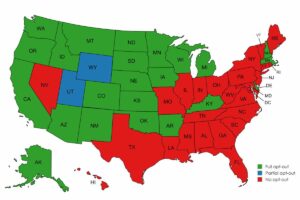
CRNA Opt-Out States
Source: aana.com
Depending on the state, CRNAs may have their own practice and work independently. There are 22 states that have opted out of the requirement for physician supervision:
- Alaska
- Arkansas
- California
- Colorado
- Iowa
- Idaho
- Kansas
- Kentucky
- Michigan
- Minnesota
- Montana
- Nebraska
- New Hampshire
- New Mexico
- North Dakota
- Oregon
- South Dakota
- Utah
- Washington
- Wisconsin
Healthcare Employers Hiring CRNAs
These are some of the leading healthcare facilities and medical systems that are hiring nurse anesthetists. Click on the links below to learn about the specific CRNA requirements for positions at these employers:
- NewYork-Presbyterian
- Cedars-Sinai
- Yale New Haven Health
- Kaiser Permanente
- Mass General Brigham
- University of Miami Health System
- Novant Health
- Highmark Health
- WVUH West Virginia University Hospitals
- UC Davis Health
- Michigan Medicine
- UPMC
- Gastro Health
- Medicus Healthcare Solutions
- US Anesthesia Partners
- Somnia
Find Career Opportunities
Now that you know how to become a CRNA, you may be interested in advancing your career. Learn how IntelyCare can keep you informed with personalized nursing job listings.
Kathleen Walder contributed to the writing of this article.