Where Do Nurses Work? Settings, Salaries, and More


You might be wondering, Where do nurses work besides hospitals? Nursing is the nation’s largest healthcare profession, with nearly 4.7 million registered nurses (RNs) employed in a wide range of healthcare settings. From helping children at school, running wellness programs in communities, supporting patients at their homes, or contributing to life-changing medical research programs, nurses have countless ways to make a difference.
But nursing isn’t limited to RNs alone. The profession also includes certified nursing assistants (CNAs), licensed practical nurses (LPNs), and advanced practice registered nurses (APRNs), making it a diverse and dynamic career path.
So, what are the most common workplaces for nurses? Let’s explore the wide variety of settings where these professionals can apply their skills.
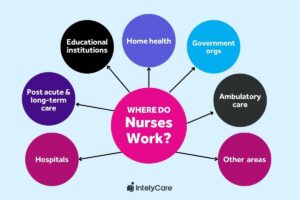
Where Do Nurses Work? 7 Areas
- Post-acute and long-term care
- Hospitals
- Ambulatory care
- Educational institutions
- Government organizations
- Home health care
- Other settings
1. Post-Acute and Long-Term Care
Post-acute and long-term care facilities — such as hospice centers, nursing homes, assisted living centers, and rehabilitation facilities — are some of the most common workplaces for LPNs, CNAs, and RNs. In these settings, nurses provide hands-on support for patients who are recovering from surgery, managing chronic illnesses, or needing help with daily living activities. While NPs may also work in long-term care, it’s not considered the most common work setting for these professionals.
| Setting | RN Salary | LPN Salary | CNA Salary |
|---|---|---|---|
| Skilled nursing facilities | $87,370 | $67,420 | $40,650 |
| Nursing and residential care facilities | $86,060 | $66,660 | $40,390 |
| Continuing care retirement communities and assisted living facilities | $81,180 | $65,040 | $39,660 |
| Residential intellectual and developmental disability, mental health, and substance abuse facilities | $85,160 | $62,050 | $39,620 |
Find the latest opportunities on IntelyCare:
2. Hospitals
What areas can nurses work in when it comes to hospital-based care? From emergency rooms (ERs) and intensive care units (ICUs) to maternity wards and progressive care, hospitals offer a range of specialized roles for nurses to apply their skills.
In hospitals, APRNs, such as NPs or CNSs, often take on advanced clinical duties, while RNs provide direct patient care by administering medications, monitoring patient status, and coordinating treatments. LPNs assist RNs by performing basic clinical tasks, while CNAs focus on hands-on support, helping patients with bathing, feeding, mobility, and ensuring comfort.
| Setting | NP Salary | RN Salary | LPN Salary | CNA Salary |
|---|---|---|---|---|
| General medical and surgical hospitals | $138,740 | $101,100 | $59,400 | $42,210 |
| Specialty hospitals (except psychiatric and substance abuse) | $142,270 | $103,500 | $65,150 | $44,010 |
| Psychiatric and substance abuse hospitals | $144,860 | $98,680 | $63,540 | $40,390 |
Where do nurses work in hospitals? Check open jobs on IntelyCare to see current salaries and opportunities:
- ER nurse jobs
- ICU nurse jobs
- Labor and delivery nurse jobs
- Med-surg nurse jobs
- Mother-baby nurse jobs
- Oncology nurse jobs
- Psych nurse jobs
- Pediatric nurse jobs
3. Ambulatory Care
Ambulatory care includes outpatient clinics, physician offices, urgent care centers, and same-day surgical centers. These settings are especially common for NPs, who may diagnose conditions, develop treatment plans, and prescribe medications, often working independently or alongside physicians, depending on state regulations.
RNs and LPNs may handle admissions, patient assessments, and assist with certain procedures, while CNAs may support basic tasks, like taking vital signs or preparing exam rooms.
| Setting | NP Salary | RN Salary | LPN Salary | CNA Salary |
|---|---|---|---|---|
| Outpatient care centers | $143,600 | $107,650 | $69,630 | $46,570 |
| Offices of physicians | $127,600 | $85,860 | $57,680 | $41,200 |
| Personal care services | $123,180 | $84,120 | $57,920 | $39,920 |
| Ambulatory health care services | $129,990 | $93,380 | $62,410 | $39,470 |
| Medical and diagnostic laboratories | $129,640 | $87,790 | $65,650 | $39,000 |
Interested in ambulatory care roles? Here are some places to start exploring real, current openings:
4. Educational Institutions
Schools, colleges, and universities also rely on nurses to keep students and staff healthy. School nurses — usually RNs — play a critical role in K–12 education by managing chronic conditions, administering vaccines, and responding to emergencies. Nurses can also be employed in academia itself, working as nursing instructors or professors in universities, preparing the next generation of nurses. While CNAs and LPNs are less commonly found in schools, they may teach students in vocational training programs.
| Setting | NP Salary | RN Salary | LPN Salary | CNA Salary |
|---|---|---|---|---|
| Colleges, universities, and professional schools | $122,470 | $98,710 | $58,470 | $45,360 |
| Elementary and secondary schools | $94,500 | $70,720 | $52,810 | $38,680 |
If you want to see what’s available right now, checking live listings is a great place to start. Here are some opportunities available on IntelyCare right now:
5. Government Organizations
Nurses also play an important role in government-run facilities and public health services. You’ll find them in Veterans Affairs (VA) hospitals, public health organizations, correctional facilities, and military branches, where they provide essential care to soldiers and other military personnel while supporting public health initiatives.
APRNs in these settings often take on leadership and advanced clinical roles, while RNs deliver direct patient care, coordinate treatment plans, and provide education to individuals and communities. LPNs may assist with routine medical tasks such as administering medications and monitoring patient conditions, while CNAs may help with daily living activities.
| Setting | NP Salary | RN Salary | LPN Salary | CNA Salary |
|---|---|---|---|---|
| Federal executive branch | n/a | $124,460 | $71,580 | $52,830 |
| State government (excluding schools and hospitals) | $124,400 | $94,170 | $62,750 | $43,880 |
| Local government (excluding schools and hospitals) | $129,150 | $92,460 | $60,370 | $42,900 |
| Social assistance | $137,540 | $82,510 | $59,940 | $35,560 |
Where do nurses work within the government? Here are some places to start exploring:
6. Home Health Care
Home health nursing enables nurses to provide medical care directly in patients’ homes, supporting individuals who are home-bound or managing chronic conditions.
This field is particularly common for RNs and LPNs, who may conduct patient assessments, administer medications, and manage wound care. APRNs can also work in home health, overseeing complex cases or serving as primary care providers. CNAs, on the other hand, may assist patients with daily living and other basic needs.
| Setting | NP Salary | RN Salary | LPN Salary | CNA Salary |
|---|---|---|---|---|
| Home health care services | $130,410 | $89,940 | $64,270 | $37,810 |
Find the latest home health nurse jobs on IntelyCare.
7. Other Settings
Nursing isn’t confined to hospitals and clinics — there are countless other places where nurses make a real impact. Here are some examples of workplaces where nurses apply their skills in unique and meaningful ways:
- Hospice and palliative care nurses support patients with serious or terminal illnesses, focusing on pain management and emotional support.
- Research nurses help design and conduct studies, collect data, and contribute to the development of new treatments and therapies.
- Occupational health nurses monitor employee health, treat injuries, and run wellness programs, promoting safe and healthy work environments.
- Telehealth nurses provide remote consultations, expanding access to care for people in rural or underserved areas.
Explore the following opportunities:
What Are the 4 Fields of Nursing? Definitions and Workplaces
Where nurses work often comes down to what type of nurse we are talking about. When people ask about the fields of nursing, they’re often referring to the different levels of nursing professionals who make up the workforce. So, where do nurses work? Each group has a unique scope of practice and typical workplaces, each contributing to patient care in its own vital way.
1. Advanced Practice Registered Nurses
APRNs represent the most highly trained group in nursing. They hold graduate-level degrees such as a Master of Science in Nursing (MSN) or a Doctor of Nursing Practice (DNP), which prepare them to deliver high-level clinical care. In states with full practice authority, APRNs can independently diagnose conditions, prescribe medications, and manage patient treatment plans.
Within this role, there are four distinct specialties you’ll often find in healthcare settings:
- Nurse practitioners (NPs)
- Certified nurse midwives (CNMs)
- Certified registered nurse anesthetists (CRNAs)
- Clinical nurse specialists (CNSs)
The majority of APRNs practice in outpatient offices, providing primary care alongside physicians, or independently, depending on the state of practice.
Learn more about where nurse practitioners work.
2. Registered Nurses
RNs make up the largest portion of the nursing workforce and are often the professionals patients interact with most in hospitals, clinics, and other care settings. To become an RN, nurses typically earn an Associate Degree in Nursing (ADN) or a Bachelor of Science in Nursing (BSN).
While RNs don’t diagnose conditions or prescribe medications, they’re at the heart of patient care — administering medications, monitoring patients’ status, and educating patients and families about managing their health.
Where do nurses mostly work? While the majority of RNs work in hospitals, you can find these professionals in nearly every healthcare setting — from outpatient clinics and long-term care facilities to schools and even public health organizations.
Learn more about where registered nurses work.
3. Licensed Practical Nurses
LPNs — also called licensed vocational nurses (LVNs) in some states — provide essential hands-on care under the supervision of RNs, NPs, and physicians. Their responsibilities include checking vital signs, assisting patients with daily living needs, administering certain medications, and providing emotional support. The majority of LPNs work in residential care facilities, but you can also find them in rehabilitation centers, substance abuse facilities, and some hospitals.
Learn more about where LPNs work.
4. Certified Nursing Assistants
CNAs provide hands-on support with daily living activities like bathing, dressing, feeding, and mobility. The majority of CNAs work in nursing care facilities and hospitals, always under the supervision of RNs or other licensed healthcare professionals. Their role is vital in ensuring comfort and dignity for patients who need extra help with everyday tasks.
Learn more about where CNAs work.
Where Do Nurses Work? FAQ
Where do nurses work in the U.S.?
Nursing is the largest healthcare profession in the U.S. and is also widely recognized as the most trusted profession by Americans. Nurses can work in all healthcare settings, including hospitals, long-term care settings, research facilities, and government institutions.
Curious about unique roles? Here are some unique nursing specialties and workplaces you may not have considered:
- SANE nursing
- Interventional radiology
- Cath lab nursing
- IVF nursing
- Coroner nursing
- Substance abuse
- Neurorestorative care
- Plastic surgery
Can nurses work internationally?
Yes. You can take your skills abroad as a nurse. However, working internationally usually requires meeting the licensing and visa requirements of the destination country. For example, a U.S. nursing license may not automatically transfer to Australia or the United Kingdom, and some countries may require you to pass specialized exams equivalent to the NCLEX.
Some nurses use international travel nursing agencies to streamline this process, while others seek public health opportunities in organizations like the World Health Organization (WHO) to combine travel with meaningful healthcare work. Check out the latest travel nursing jobs to learn more.
Can nurses work remotely?
Yes, nurses can work remotely, though opportunities vary by role. NPs often find remote positions through telehealth organizations, particularly in specialties that focus on chronic disease management or mental health. RNs also have a growing number of remote options, including triage, utilization review, case management, and telemonitoring. However, remote work is far less common for LPNs and CNAs, whose roles generally require hands-on patient care.
Find remote nursing jobs and utilization review nursing jobs on IntelyCare.
Find Nursing Roles That Match Your Preferences
Where do nurses work, and what positions are available right now? IntelyCare connects you to the best-fitting nursing roles nationwide based on your specialty, location, and lifestyle preferences. Sign up now to see roles personalized for you.