Is Being a Pediatric Home Health Nurse for You?

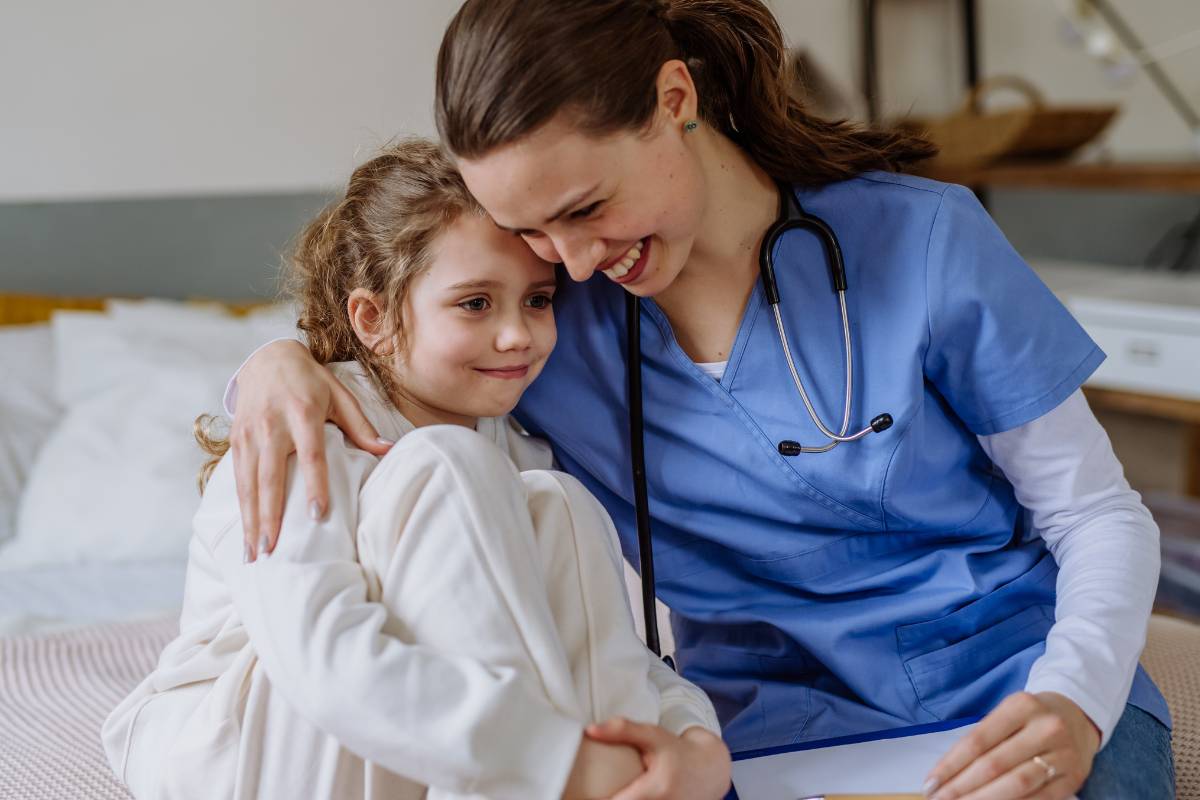
A pediatric home health nurse is a registered nurse (RN) or licensed practical nurse (LPN) who provides medical care to children in the comfort of their own homes. These nurses support patients with a wide range of needs, from medically fragile infants who require complex technology to children recovering from surgery and those with chronic conditions like cystic fibrosis or cerebral palsy.
Pediatric home health nurses may work for a variety of employers:
- Hospital systems
- Home health agencies
- Public health organizations
- Self-employed in pediatric private duty nursing
Home Health Pediatric Nurse Job Responsibilities
During an average day in this role, these are some of the responsibilities you may have:
- Monitoring and assessing: Conduct regular assessments of vital signs, growth, symptoms, and developmental progress to track a child’s health status.
- Administering treatments and medications: Deliver IV or central line medications, injections, or tube feedings as prescribed.
- Managing complex medical equipment: Operate and troubleshoot ventilators, oxygen equipment, feeding pumps, or tracheostomy care devices.
- Providing wound and post-surgical care: Administer dressing changes, wound care, and ostomy maintenance, and monitor for complications.
- Educating families and caregivers: Teach parents or guardians how to provide daily care, recognize warning signs, and use medical equipment safely.
- Coordinating with healthcare teams: Communicate with physicians, therapists, speech pathologists, and other specialists.
- Providing emotional support: Offer guidance and reassurance to children and their families as they navigate ongoing health challenges.
Potential Pros and Cons of Pediatric Home Care Nursing
| Benefits | Drawbacks |
|---|---|
|
Patients are relatively stable compared to inpatient pediatric settings. There’s the potential for long-term, deeper connections with patients and families. You may have more schedule flexibility, independence, and autonomy. |
Family dynamics can be complex, requiring tact and firm boundaries. Driving to each patient means you may spend more of your day commuting. You may earn a lower salary than RNs in acute care hospitals. |
Pediatric Home Health Nurse Salary Expectations
While average salary depends on several factors, home health RNs typically earn about $89,940 per year. You may earn more if you live in a large metropolitan area, have several years of experience, or take on additional responsibilities. Gaining a specialty certification from the Pediatric Nursing Certification Board (PNCB) could also help you earn a higher salary, depending on your employer.
What are the areas where nurses earn the highest income? See roles in the following states:
How to Become a Pediatric Home Health Nurse: 4 Steps
Step 1: Complete a Prelicensure Program
First, you’ll need to complete an accredited nursing education program in order to apply for licensure. There are two main nursing tracks you might pursue to work in home health:
- LPN programs typically take about a year and allow you to begin working sooner. Agencies hire LPNs for pediatric home health, including in private duty nursing, where you may manage ventilators, feeding tubes, and medication administration under RN or physician supervision.
- RN programs take longer, but may mean more job mobility and a higher salary down the line. You can pursue either an Associate Degree in Nursing (ADN) or a Bachelor of Science in Nursing (BSN). While an ADN can qualify you for RN licensure in about two years, a BSN may offer more options for career advancement.
Step 2: Earn Your Nursing License
After graduation, you must pass the NCLEX exam to become a licensed nurse. LPNs take the NCLEX-PN, while RNs take the NCLEX-RN. The test is designed to assess your readiness to provide care and use your nursing judgement at the entry level. Once you pass, there may be additional applications and fees to finalize your state license.
Step 3: Gain Experience
Depending on the job availability where you live, you may be able to enter home health peds nursing as a new graduate. However, working in a hospital or facility for a year or two can help you get more supervision and training early in your career, helping you grow your skills in a more controlled environment.
You might consider roles in these areas:
- Pediatrics
- Neonatal intensive care units (NICUs)
- Pediatric ICUs (PICUs)
- Outpatient pediatric practices
Step 4: Start Your First Role in Pediatric Home Health Nursing
Once you’ve built a foundation of experience, you can apply for roles in peds home health with confidence. When writing your nurse resume and cover letter, highlight your passion for pediatric patients and their families, and don’t forget to list any certifications you have or training you’ve done. Before interviewing for jobs, be sure to review common nursing interview questions.
Pediatric Home Health Nursing FAQ
What’s the difference between LPN and RN duties in this role?
LPNs often provide direct care such as monitoring vital signs, administering medications, and assisting with daily activities. RNs may do more care management tasks like planning, patient assessments, and managing advanced equipment. Many home health teams use both LPNs and RNs to ensure patients receive comprehensive, continuous care. Learn more about RN vs. LPN responsibilities.
Is home health nursing safe for nurses?
Pediatric home health nursing is like any nursing role: It comes with risks. Nurses may be exposed to infectious diseases, difficult home environments, or the stress of working without immediate backup. Agencies should provide safety protocols, protective equipment, and training to minimize risks.
How many patients do home health nurses see in a day?
This depends on the type of home health nursing. A private duty nurse may work with one child for a full shift, which might be four, eight, or even 12 hours. In an agency model, where nurses travel between homes to see multiple patients, an RN might see six to eight patients per day, depending on their needs and geographic location.
Find Pediatric Roles and More
Whether you’re looking for work as a pediatric home health nurse or another role, we can help with your job search. Our personalized job notifications can send tailored opportunities directly to your inbox. Learn more today.