7 Essential RN Interview Questions to Ask



Finding a qualified, reliable, and top-performing registered nurse (RN) is vital to your organization’s success. As a part of the nurse management team, knowing which RN interview questions to ask is just as important as writing a great nurse job description. These questions will help you narrow your applicant pool down to your best candidates.
Like nursing, developing a successful interview strategy takes time and practice. Thankfully, there are ways to make this process less arduous. In this article, we’ll discuss seven essential interview questions to ask a nurse to help you confidently find the best fit for your facility in record time.
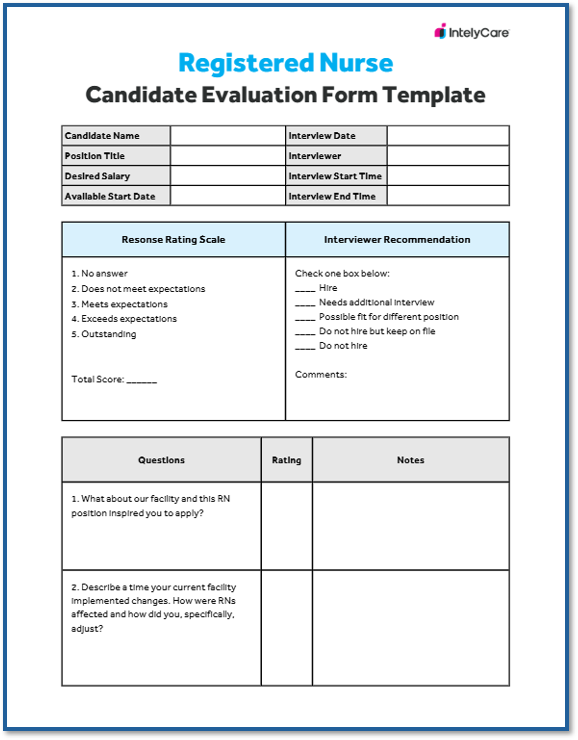
Want more competitive insights for your interview process? Check out the latest RN postings on our job board to see what other organizations are offering to nursing candidates and discover more ways for your facility to stand out. Also consider downloading our free candidate assessment form to help you stay organized throughout the interview process.
7 Examples of Interview Questions for RN Candidates
Most interviews start off with one or two basic introductory questions to help the hiring manager get a feel for the nurse’s tone and conversational style. Then the interview will move into more challenging in-depth questions. It’s a good idea to use a combination of interview question types, such as critical thinking questions and behavioral questions.
Let the candidate know how much time the interview is likely to take, and then actively guide the conversation to maintain a productive pace. If a candidate gets stuck, providing a prompt or some more context may help them answer to the best of their ability.
Now that you have some ideas on how to structure and style your interview, here are seven sample interview questions for RN candidates.
1. What about our facility and this RN position inspired you to apply?
Starting with a targeted introduction like this one gives you a bit more information about a candidate than the basic “Tell me something about yourself” nursing interview question. A candidate’s reply provides insight into why they want to join your healthcare team.
Answers can reveal how well a nurse has researched your facility and patient population and whether their values complement yours. Questions like this one also shed light on how well the nurse understands the RN role and its responsibilities.
What to listen for:
- Someone who can describe your mission and values and explain how they can fulfill the role is engaged and invested in your organization
- Professional values that complement those of your facility
Potential follow-up questions:
- What is one of your top professional values, and how do you demonstrate it in your nursing practice?
- What do you enjoy about providing care for this particular patient population?
2. Describe a time your current facility implemented changes. How were RNs affected and how did you, specifically, adjust?
Being able to positively adjust to workplace changes is a necessary skill for RNs in all clinical environments. As autonomous decision-makers on the front lines of patient care, RNs rely on evidence-based practice standards to guide nursing interventions. This ensures that decisions are based on up-to-date research and clinical expertise, not tradition or habit.
Is the nurse committed to staying current in their practice or do they seem set in their ways? If they’re interested in developing their patient care skills, on-the-job training and a supportive work environment can help improve these important capabilities. If not, they may not be well suited for the role.
This RN interview question assesses the nurse’s critical thinking skills by inviting them to share their thought process. Critical thinking nursing interview questions, and answers candidates may provide, can help demonstrate a nurse’s ability to adapt and persevere.
What to listen for:
- Openness to changes in clinical environments and excitement about learning
- Understanding of the importance of new research, technology, and clinical findings
Potential follow-up questions:
- Tell me about a time you had to learn a new skill to better serve a patient in your care.
- What would you do if a nurse leader implemented a change that you didn’t agree with?
3. How do you decide which tasks to delegate to licensed practical nurses (LPNs) and certified nurse assistants (CNAs)?
This will likely be one of the more straightforward RN interview questions for your candidate to answer. Delegation occurs when an RN transfers task responsibility but retains accountability for the outcome.
Take stock of how the nurse discusses delegating to LPNs and CNAs. If the RN only wants to transfer the least desirable tasks or demonstrates disrespect toward these roles, it can quickly sow discord among your staff. This warning sign would warrant more RN interview questions about cooperation and teamwork.
What to listen for:
- Knowledge of the 5 Rights of Nursing Delegation and a firm grasp of the RN’s scope of practice
- Leadership qualities and effective communication skills
Potential follow-up questions:
- What are three traits of a high-performing nursing team?
- How would you communicate with a CNA who isn’t engaged in their duties?
4. Tell me about a time when you advocated for a patient or resident, but received push-back from the medical team. How did you handle the situation, and what was the outcome?
Being a patient advocate is an essential nursing role. The American Nurses Association (ANA) Code of Ethics explains that the nurse promotes, advocates for, and protects the patient’s rights, health, and safety. Often, the nurse’s intervention on behalf of their patient prevents serious harm or poor outcomes.
Asking behavioral RN interview questions like this one can provide excellent insight into how the candidate would perform at your facility. The candidate’s recollection of past actions will help you understand how well they follow the nursing process, safeguard their patients, deal with conflict, communicate with team members, and utilize their resources.
What to listen for:
- Ability to prioritize patient values and an understanding of patient-centered care
- An attitude of professionalism when engaging with interdisciplinary colleagues
Potential follow-up questions:
- How do you balance patient requests with orders from the nurse practitioners and physicians on the care team?
- What follow-up steps do you take after advocating for a patient during rounds?
5. Have you ever made a medication or nursing error? Please explain what happened, how you handled the situation, and what the outcome was.
Medication errors in the U.S. alone cost $42 billion annually.The impact of a medication error can range from no harm to severe injury or even death to a patient. Nurses are human, and they make mistakes. Unfortunately, some mistakes can have detrimental consequences.
This is one of the more difficult interview questions to ask a nurse. It’s important not to hold the error against them. Instead, factor in why the nurse made the error, what they did to ensure the patient’s safety, and whether they learned from the mistake. If you’re hiring a nurse for a clinical role, it’s crucial to assess their ability to follow policies and procedures regarding direct patient care. Clinical nurse interview questions can be related to safely administering medication, documenting patient information, educating patients, or other aspects of direct care.
What to listen for:
- Prioritization of patient safety
- Corrective actions that reflect integrity, accountability, and professionalism
Potential follow-up questions:
- What is your current practice for safely administering medications?
- How would you communicate about a patient’s refusal to take a medication with the rest of the care team?
6. How would you handle an angry or upset patient/family member?
The healthcare environment can be stressful for patients and families to navigate. They may struggle with hearing about a poor diagnosis or decline in health and could respond to a nurse’s care attempts with frustration or disrespect.
Nurses are often responsible for calming and comforting these individuals. If the patient remains angry, or if safety of the patient or team is compromised, the nurse needs to know how to use the appropriate chain of command.
After listening to a nurse’s response to this RN interview question, you may want to share the ways your facility is working to prevent violence against nurses. Our nursing trends survey suggests that 28% of nurses feel unsafe going to work, and your input may alleviate a candidate’s concerns by confirming that their safety is a top priority.
What to listen for:
- Ability to stay respectful and assertive during difficult conversations with patients
- An understanding of how to use facility resources to receive assistance
Potential follow-up questions:
- How do you recover and reset after challenging patient interactions?
- What is a strategy you use for de-escalating conflicts with patients?
7. What has been your proudest achievement as an RN?
This is the RN’s time to shine as they share their greatest career moment with you. Even if the nurse is shy or introverted, their nonverbal communication should signal increased enthusiasm or excitement as they recall this special event. Ending the conversation with RN interview questions about strengths invites the candidate to share experiences and traits that set them apart from other applicants.
What to listen for:
- An enthusiastic or genuine response that demonstrates strong intrinsic motivation for providing high-quality nursing care
- Achievements that indicate high performance in the past
Potential follow-up questions:
- Have you ever held a nursing leadership position?
- What are your top three nursing strengths?
Asking RN Interview Questions: Preparation and Strategy
As a nurse leader, you’ll need to be strategic in the questions you ask your candidates. You only get a short time to obtain and evaluate information from your RN interview questions and answers. Identifying red flags that impact patient safety or disrupt your nursing team while you work to uncover a nurse’s best qualities is crucial.
There’s a delicate balance between asking challenging questions to assess safe, high-quality nursing practice and cultivating a good experience for your potential new hires. Here are some tips to help you conduct positive, informative interviews.
Use a Warm or Uplifting Tone of Voice
Start and end the interview on a positive note, using supportive and constructive language when appropriate. Though interview questions for nurses are often challenging and rigorous, the experience shouldn’t be offputting or exhausting. The nurse will pick up on subtleties of your organization’s culture and leadership style through your tone of voice. Create an environment they hope to return to.
Use Non-Verbal Cues to Establish Rapport with the Nurse Candidate
Be mindful of what your nonverbal cues are expressing. For example, frowning while concentrating may come across as anger and disapproval to the candidate, whereas a relaxed face and occasional smiling can help them feel welcomed and encouraged.
Offer Support When Asking Challenging Interview Questions
For nurses who are new to the hiring process, interviews can trigger anxiety that may mask professional competency. If you notice this happening, help the candidate by providing brief cues. For example, you can break down a behavioral question into smaller components of the Situation-Task-Action-Results (STAR) method. They’ll still answer the question, and you may discover the nurse has excellent clinical skills that more than make up for lackluster interviewing skills.
Find and Interview Highly Qualified RNs Today
Asking the right RN interview questions is a great way to narrow down your list of candidates, but hiring and onboarding reliable nursing staff can be challenging. If you’re looking to quickly find the right candidates, consider posting your vacant positions on the nation’s top nursing job board.