Nursing Model vs. Medical Model: 6 Main Differences

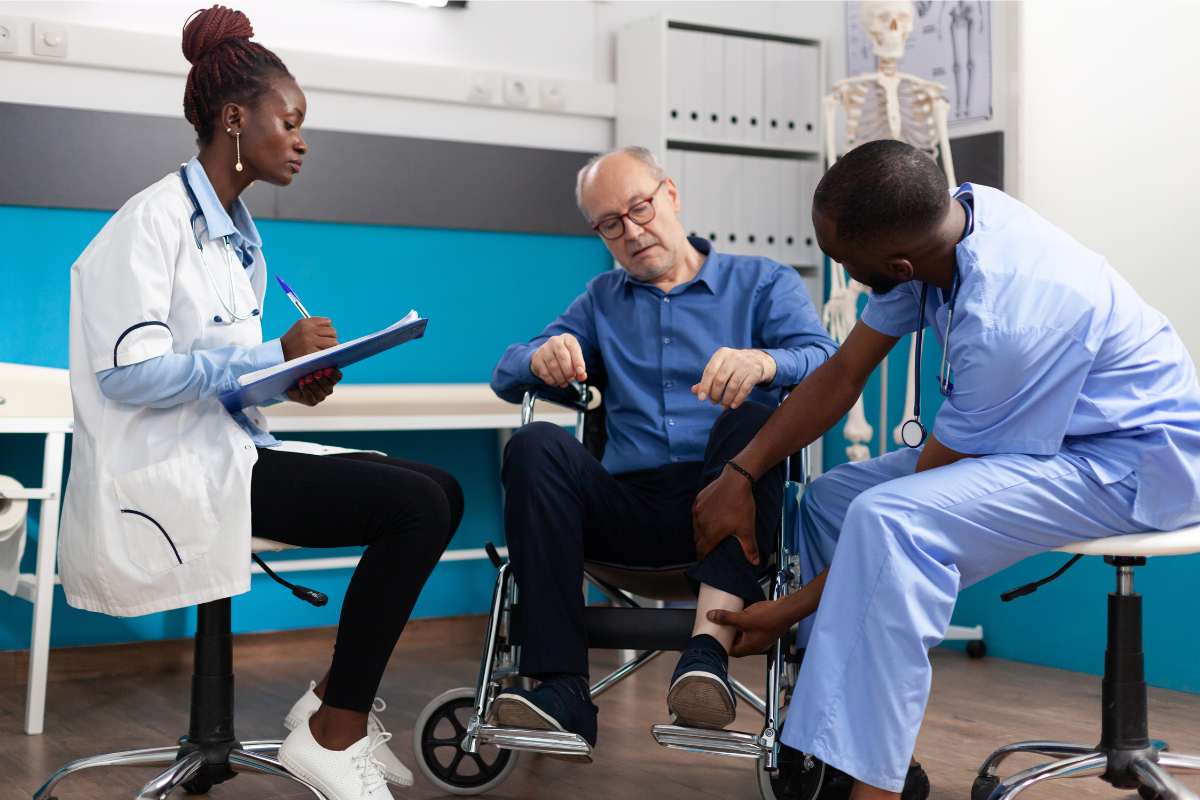
Are the nursing model vs. medical model of care different from one another? These conceptual frameworks help guide professionals who have different practice scopes and backgrounds, but the same goal of caring for patients. Let’s explore where these models come from and compare them in real-world patient situations.
Understanding the Nursing Model vs. Medical Model of Care
To start, what is a model of care? This is a framework for providing care that integrates evidence-based practice, theories, and care standards within a health system. There are many models of care — some are grouped by specialty, illness, population, or profession. And while these concepts may be abstract, they help provide a foundation for systems and the professionals who work within them.
Nursing Care Models Explained
Perhaps the most foundational nursing care model is called the nursing process. It’s a step-by-step workflow that helps guide nurses in patient care. For review, here’s what the nursing process is:
- Assessment: Gathering objecting and subjective data; this may include vital signs, patient history, pain rating scale, or heart and lung sounds.
- Diagnosis: Using assessment data, apply nursing diagnoses. These may be problem-focused or oriented around risk, health promotion, or syndromes.
- Planning: Creating a care plan of nursing interventions based on the patient’s unique needs and preferences.
- Implementation: Taking action on nursing interventions, which can include education, medication administration, and other nursing tasks.
- Evaluation: What was the outcome of interventions? Evaluation helps determine next steps in the care plan.
The patient relationship is an essential element of nursing care. Nurses have more face-to-face contact with patients than any other clinician, so they tend to be in the best position to advocate for a patient and understand their preferences. This nurse-patient relationship is a critical element of many nursing theories.
To summarize, nursing care aims to be holistic. Nurses don’t just seek to alleviate a single symptom, but to investigate and understand a patient’s health status in the context of their history. By combining the nursing process with person-centered care, nurses aim to support a patient’s emotional, physical, spiritual, and social needs.
Defining Medical Care Models
The traditional medical model of care focuses on physiological processes and the diagnoses and treatments that apply to them. Under this model, symptoms indicate medical issues that are addressed through prescribed treatment. Like a machine, the human body requires repair under this framework.
Specialists, who are experts in a particular disease, treatment, or patient population, are essential to the medical care model. After earning their Medical Doctorate (MD), physicians may spend a decade in residency for a particular specialty, such as emergency medicine, psychiatry, surgery, or something else, in order to gain a deep knowledge base in their area.
While the medical model doesn’t follow the exact same workflow as the nursing process, it still uses the elements of assessment, testing, diagnosis, planning, and treatment. Yet physicians are typically less involved with each individual patient — worldwide visit averages with primary care physicians average between 10 and 27 minutes — so while physicians may investigate a patient’s health history, they’re less likely to have time to get to know their patients.
Medical Model vs. Nursing Model: Comparison Table
| Nursing Care Model | Medical Care Model |
|---|---|
| Goal: Holistic symptom relief and health promotion
Applies nursing diagnoses: For example, fall risk, failed skin integrity, unstable blood glucose Holistic: Nurses may switch specialties and care areas with flexibility Focuses on the nurse as patient expert and advocate Nurse-patient interpersonal relationship is central |
Goal: Disease diagnosis and treatment
Applies medical diagnoses: For example, diabetes, heart failure, lung cancer, stroke, bipolar disorder Specialized: Physicians typically remain in a single specialty throughout their career Focuses on the physician as care team leader and primary decision-maker Disease and treatment are central |
What about advanced practice nurses? Nurse practitioners and other APNs can diagnose, prescribe, and treat disease, but they come from a nursing background. During their advanced nursing education, NPs gain a deeper knowledge of pharmacology, disease processes, and treatment methods, yet they still bring a holistic approach to patient care, allowing them to combine approaches from both medical and nursing models.
Nursing Model vs. Medical Model Examples
Let’s explore how the nursing and medical care models guide clinicians to perform different care plans.
Example 1: Emergent Psychiatric Care
A 27-year-old female presents to the Emergency Department (ED or ER) with her mom. The mom reports that the patient’s behavior has grown increasingly erratic over the last several months, with irrationality, delusions, lack of sleep, and deep swings into depression. The patient expressed thoughts of self-harm, causing her mother to bring her to the hospital.
Nursing actions:
- Confiscating any belts, piercings, shoelaces, or other sharp objects to ensure patient safety.
- Perform a thorough mental status exam to determine the patient’s current mental health state.
- Use therapeutic communication to ensure the patient knows she is safe, and educate the parent about the care plan.
- Collect blood draws and administer medications as ordered by the physician.
Medical actions:
- Thorough mental status exam, including current symptoms as well as personal, family, and medical history.
- Order labs to investigate physiological processes behind mood changes.
- Order short-term medications to help stabilize the patient.
- Once the patient is stabilized, educate the patient and family, and provide a referral to a psychiatrist for long-term treatment.
Example 2: Med-Surg
A 76-year-old male patient has just come from the post-anesthesia care unit (PACU) after surgery for a hip replacement. He is still groggy, but reports some pain at the surgical site, and says he is hungry for dinner. His wife is at the bedside and is asking when he will be able to get up to use the bathroom.
Nursing actions:
- Perform a post-surgery assessment of the surgical site and review orders for dressing changes. Assess the patient’s orientation, swallowing, and mobility.
- Review orders for post-surgical pain management and administer medications as necessary.
- Educate the patient and wife on post-surgery mobility changes, and provide a urinal.
- Delegate food delivery to a nursing assistant (CNA), with instructions to take small, slow bites with plenty of water.
Medical actions:
- Perform a post-surgical assessment to follow up on the patient’s recovery.
- Order scheduled and as-needed pain medications.
- Order a wound care regimen, including negative pressure therapies, hydrocolloid dressings, and nutrition management as necessary.
Which Is Better: The Nursing vs. Medical Model for Care?
Neither is superior: The two professions need each other to function and serve patients.
Nurses do not have the ability to diagnose, order treatments, or prescribe medications. They don’t have the formal training or background to perform advanced procedures. On the other hand, nurses perform the majority of hands-on care, and are a patient’s primary support and advocate while in the hospital.
Physicians generally do not perform nursing tasks, such as IV or blood administration, patient turns, or tracking intake and output. Patients need excellent nursing and medical staff to experience the best health outcomes.
See the Nursing Model vs. Medical Model in a New Role
Whether you’re looking for more autonomy, flexibility, or a new specialty, we can help you find the nursing opportunities that fit your needs. Learn more with personalized job notifications.