How to Become an Aesthetic Nurse


In This Article |
|---|
|
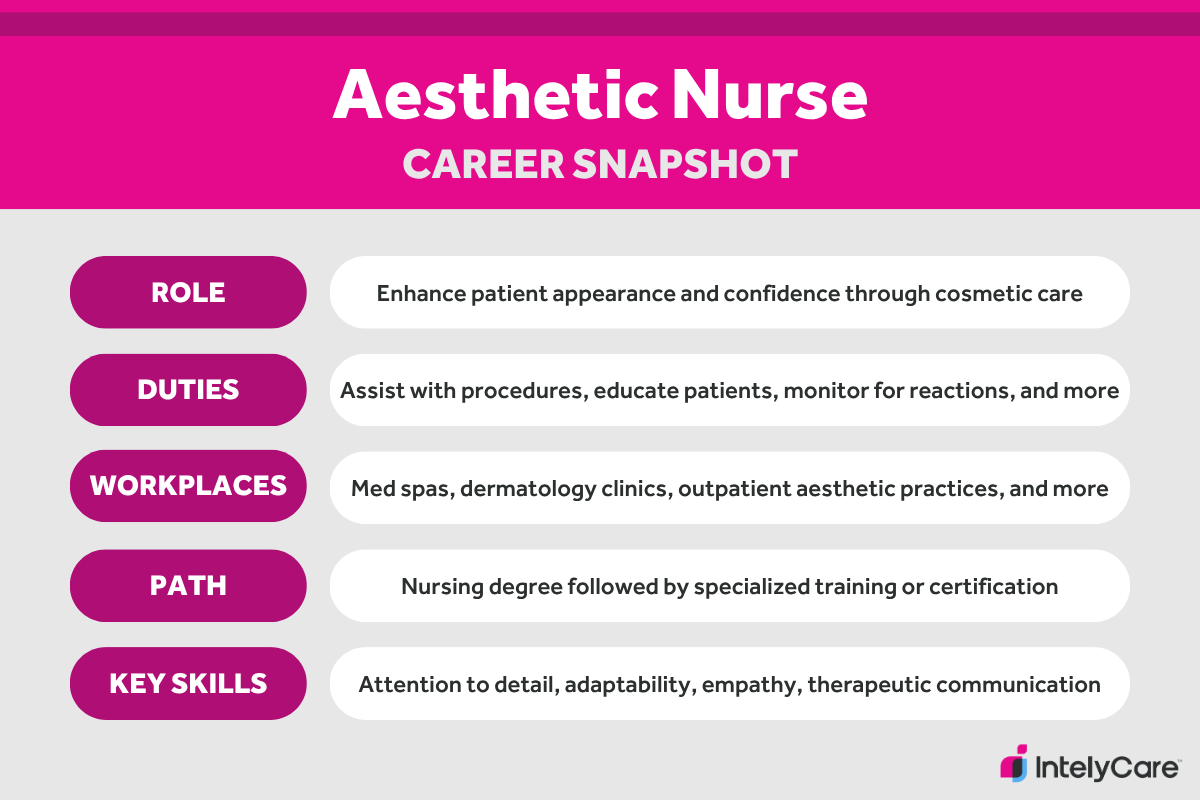
An aesthetic nurse, also known as a cosmetic nurse, specializes in nonsurgical procedures like chemical peels and laser treatments, designed to enhance patients’ appearances. These nurses work alongside advanced practice professionals like plastic surgeons, cosmetic dermatologists, aesthetic nurse practitioners (NPs), and others in aesthetic medicine — usually outside of hospitals in settings like medical spas, dermatology clinics, and private practices.
With over 19 million nonsurgical aesthetic procedures performed globally every year, aesthetic nursing is a fast-growing specialty. Let’s explore what these professionals do, where they work, and the skills that matter most.
What Does an Aesthetic Nurse Do?
Wondering what a typical day looks like for these nurses? Below are a few examples of routine tasks they perform:
| Responsibilities | Description |
|---|---|
| Patient assessment | Conduct detailed skin evaluations and discuss patients’ goals. |
| Pre-procedure care | Cleanse the skin and apply topical anesthetics as needed to ensure patients are comfortable during cosmetic interventions. |
| Assisting in injectable treatments | In some states, registered nurses (RNs) can administer Botox and other neurotoxins, under the supervision of a licensed healthcare provider. |
| Administering treatments | Perform noninvasive treatments such as chemical peels, microdermabrasion, or laser therapies. |
| Post-treatment care | Provide patients with detailed aftercare instructions to maximize results and minimize complications. |
Where Do Cosmetic Nurses Work?
Aesthetics nursing offers greater flexibility compared to traditional hospital roles. You’ll typically work in outpatient, cosmetic-focused environments with steady daytime hours and few, if any, night or holiday shifts. Here are some examples of aesthetic medicine work environments:
- Medical spas
- Plastic surgery centers
- Dermatologist offices
- Outpatient medical clinics
- Private aesthetic clinics
To get a better idea of where you might work, check out the latest aesthetic nurse jobs. You’ll find opportunities at employers including
- Advanced MedAesthetic Partners
- Berman Skin Institute
- Chapter Aesthetic Studio
- LaserAway
- NakedMD
- OrangeTwist
- Pinch Med Spa
- Restore Hyper Wellness
- Sono Bello
- The Skin Clique
Browsing real job postings can give you insight into the types of clinics that are hiring and what qualifications they’re looking for.
Aesthetic Specialties for Nurses
A cosmetic nurse can specialize in various areas of aesthetic medicine, each focusing on different procedures and treatments. Here are some of the most common specialties within the field:
Injection Nurse
An aesthetic nurse injector, often simply called a nurse injector, specializes in administering injectable treatments such as neuromodulators (e.g., Botox, Dysport) and vitamin “cocktails” for skin rejuvenation. However, the range of injectable treatments you’re authorized to perform is largely determined by the laws and regulations of the state where you practice.
For example, in some states a Botox nurse may be allowed to give injections under physician oversight, while in others nurses may not be allowed to administer neurotoxins at all. Dermal fillers often have even stricter rules due to the complexity of the procedure and risks involved.
Chemical Peel Nurse
These nurses perform chemical peels to enhance skin texture, tone, and overall appearance. In addition to applying the peel, you’ll evaluate patients’ skin types, customize treatment plan, and guide patients through before-and-after care for the best results. A deep knowledge of peel solutions, their strengths, and how they interact with various skin conditions is essential.
Tattoo Removal Nurse
Tattoo removal nurses specialize in using laser technology to break down tattoo pigments, helping patients fade or completely remove unwanted tattoos. This role requires precise knowledge of laser equipment and safety protocols, as well as the ability to assess skin types and predict how different skin tones might react to treatment.
Laser Facial Nurse
These nurses specialize in using advanced laser and light-based technologies to treat a variety of skin concerns, such as sun damage, rosacea, acne scars, and pigmentation issues. They operate devices like intense pulsed light (IPL) and fractional lasers to stimulate collagen, improve skin texture, and promote a youthful appearance.
Laser Hair Removal Nurse
These nurses also use lasers. In this case, they specialize in hair removal by using the laser to vaporize unwanted hair over a short series of treatments. The number of necessary treatments is unique to the patient’s body.
Non-Surgical Body Treatment Nurse
These nurses focus on noninvasive treatments designed to contour and improve the appearance of the body without surgery. This can include procedures like cryolipolysis (fat freezing), radiofrequency skin tightening, and photobiomodulation.
How to Become an Aesthetic Nurse
Your journey to a career in aesthetics as a nurse will differ depending on your background and ambitions. Below, we outline the common steps nurses take to enter this specialty.
1. Attend Nursing School
Nursing school is where you learn the foundational knowledge you need to work as a nurse. Whether you choose to pursue an Associate Degree in Nursing (ADN) or a Bachelor of Science in Nursing (BSN), you’ll study a wide range of subjects — from anatomy to pharmacology — that prepare you to step into a wide range of entry-level nursing roles.
2. Pass the NCLEX
After finishing your education, you’ll need to pass the NCLEX exam to become a licensed RN. Holding this license is essential for practicing nursing and advancing into specialties, including aesthetics.
3. Gain Hands-On Experience
After completing your aesthetic nurse education, it’s important to gain hands-on training. In this role, you’ll need strong injection technique, sharp assessment skills, knowledge of facial anatomy, and an eye for detail. The specialties below can help you develop a solid foundation for working in this field:
4. Pursue Additional Training
To transition into nursing aesthetics, you’ll need to complete additional training focused on cosmetic procedures such as injectables, laser treatments, and skincare. Many organizations offer courses tailored to these skills. Here are some examples:
- The National Laser Institute offers training in neurotoxin injections, laser treatments, and other aesthetic procedures.
- The American Academy of Facial Esthetics features courses in various injections, facial pain therapy, and even on how to open your own medspa business.
- The American Board of Aesthetic Medicine has numerous courses including cosmetic laser therapies and chemical peels.
- The American Association of Aesthetic Medicine and Surgery offers courses on botulinum toxins and dermal fillers.
These courses become especially important if you’re exploring how to become a nurse injector, as specialized training with hands-on components is essential for building your expertise and compliance with state practice laws.
Aesthetic Nurse Certification
Certifications in nursing aesthetics aren’t always required to enter the field, but they can help build trust with employers and clients — especially in a competitive market. Offered by the Plastic Surgical Nursing Certification Board (PSNCB), here are a few examples of certifications you can pursue in this specialty:
Aesthetic Nursing Skills
Every nursing specialty requires unique traits. Here are some skills that are useful for this specialty:
| Skills | Description |
|---|---|
| Compassion | The desire to change one’s appearance is often rooted in a variety of complex emotions. Patients must reveal a number of vulnerabilities to seek your services, so treating them with compassion is key in this field. |
| Active listening | Active listening is a pivotal aspect of practicing compassion. Some procedures require patients to repeatedly seek your services, so you’ll develop a rapport with many of them. Active listening helps you stay on top of your game, and makes your patients feel comfortable with you. |
| Detail orientation | Many cosmetic procedures focus on wrinkles, fine lines, and other minute changes in appearance. These details may seem small, but they’re a big deal to your patients. Plus, you must consider that many of your patients will be seeking facial changes. Mistakes could be detrimental to their self-esteem. |
| Adaptability | Sometimes things don’t go as planned, and that can be especially nerve wracking during surgical procedures. You’ll need to think quickly if something unexpected happens — your patient’s well-being depends on it. |
| Continuous learning | The field of aesthetic medicine is always evolving, with new procedures, techniques, and technologies emerging each year. To provide the best care and stay competitive, you must stay up to date with the latest trends, which can be accomplished through attending nursing conferences, taking continuing education courses, and subscribing to industry journals. |
How Much Do Aesthetic Nurses Make?
The average aesthetic nurse salary is about $56,000, and usually falls between $37,000 to $68,000 per year. Your salary may vary based on your education, years of experience, and the facility in which you work. Some cosmetic nurses open their own practices, and their salary will depend on their client base, business success, and location.
Curious about where nurses earn the highest salaries? Some states are known for offering competitive pay. Here are a few top-paying examples:
How to Become an Aesthetic Nurse: FAQ
What is the job outlook for aesthetic nurses?
The demand for nurse aesthetic services continues to rise as more people seek beauty treatments. This growing interest is reflected in the booming aesthetic medicine industry — valued at $82.46 billion in 2023 and projected to reach $143.3 billion in the next couple of years, with a steady growth rate of 8.3% annually.
Can I open my own medspa as a nurse with aesthetics training?
Your scope of practice depends on state laws and your career goals. In some states, RNs can only give cosmetic injections, like Botox, under supervision of a licensed healthcare provider, while in others, they’re not allowed to perform them at all. If your goal is to run your own practice and provide a full spectrum of services including injections, consider becoming an aesthetic NP or partnering with other healthcare professionals in the aesthetics field.
Aesthetic vs. dermatology nurse: What’s the difference?
Aesthetics nursing centers around elective cosmetic treatments — like Botox, fillers, laser therapies, and skin rejuvenation — to enhance a patient’s appearance. Dermatology nurses, on the other hand, work in medical settings alongside dermatologists and focus on medical skin conditions such as eczema, acne, and skin cancer.
Is Becoming an Aesthetic Nurse Right for You?
Now that you know the basics, you can make an informed decision on whether or not to pursue this specialty. Create the lifestyle you crave by finding nursing job opportunities on IntelyCare today!
Ayanna Dunn, BSN, RN, contributed to the writing of this article.