Nurses to Know: Hazel Johnson-Brown, the First Black Chief of the U.S. Army Nurse Corps


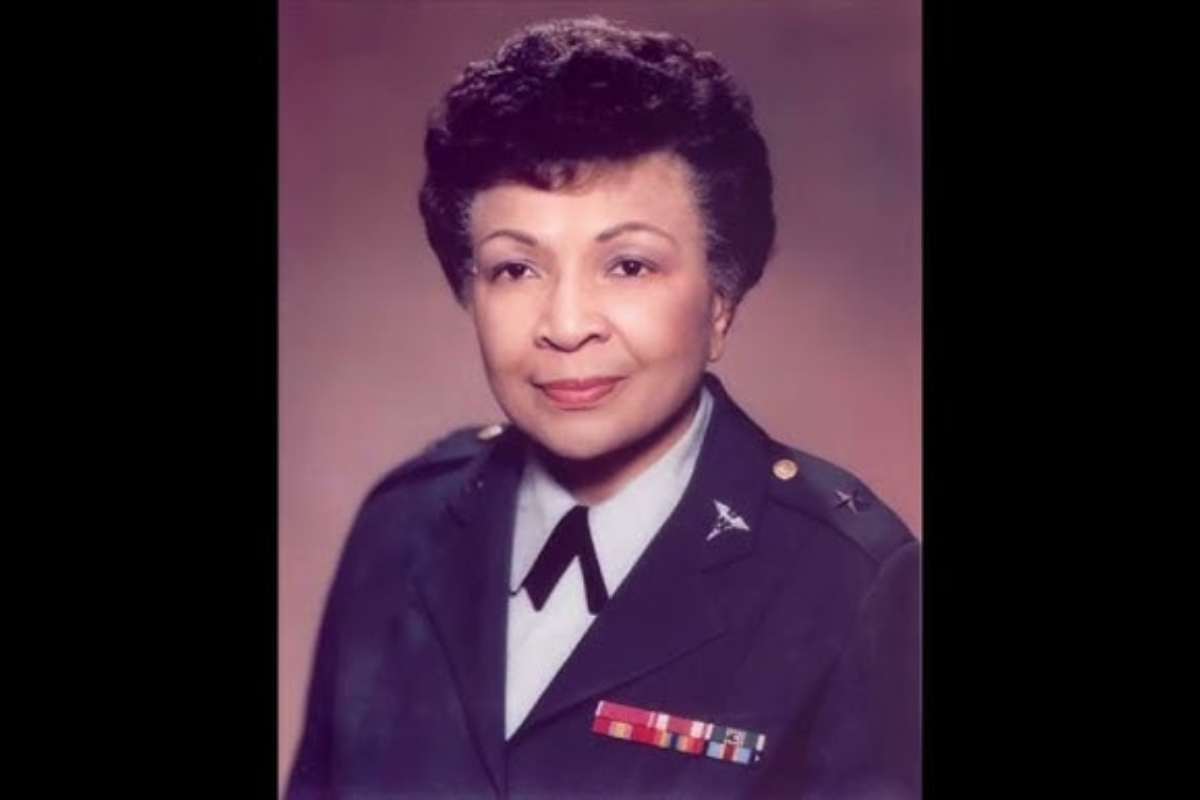
Hazel Johnson-Brown was a chief Army nurse, advanced nurse educator, and leader during her tenure in the United States military. She fought prejudice throughout her career and remains a pioneer in nursing, having become the first Black female general and first Black chief of the U.S. Army Nurse Corps. Learn about Johnson-Brown’s impactful life, and how her story contributes to the evolution of the nursing profession.
The Life of Hazel W. Johnson-Brown
Early Life
Born on October 10, 1927, in West Chester, Pennsylvania, Johnson-Brown was one of seven children. She was interested in becoming a nurse from childhood, but was denied admission to her local nursing program. A 2004 National Public Radio interview with Hazel Johnson-Brown quotes her saying, “The director of nursing met us [Johnson-Brown and her sister] and said to her and myself, ‘We’ve never had a Black person in our program, and we never will.’”
Rather than give up, she moved to New York City and enrolled at the Harlem Hospital School of Nursing, where she earned her diploma in 1950, and worked in the emergency room there as a new nurse. Five years later, Johnson-Brown joined the U.S. Army Nurse Corps, seven years after the military was desegregated. She served at Walter Reed Army Medical Center in a med-surg unit, and in a labor and delivery unit in Japan.
Advanced Education
Between 1958 and 1959, Johnson-Brown went back to school through the Army Nurse Corps’ Registered Nurse Student Program, obtaining her bachelor’s degree in nursing (BSN). After working in the operating room, she again returned to school to earn a master’s in nursing education, and taught students in the OR specialty before becoming First Nurse on staff at the Medical Research and Development Command.
The Army selected Johnson-Brown to earn a PhD in education administration in 1973, and by 1976, she was director and assistant dean of the Walter Reed Army Institute of Nursing. Just three years later, she was nominated to be chief of the Army Nurse Corps and was promoted to Brigadier General as the first Black woman to ever achieve this rank.
Brigadier General Hazel Johnson-Brown
When she was promoted, Johnson-Brown remarked, “Race is an incidence of birth … I hope the criterion for selection didn’t include race, but competence.” Indeed, Johnson-Brown had extensive leadership and management skills. As Army Nurse Corps Chief, she oversaw 7,000 nurses, eight medical centers, 56 community hospitals, and 143 clinics across the U.S., Panama, Germany, Italy, Japan, and Korea.
As chief, she established the first Army Nurse Corps Standards of Practice, expanded opportunities for Reserve and National Guard nurses, developed academic scholarship policies, and fostered research and professional development. She also won several medals and awards over the course of her career. She was twice named the Army Nurse of the Year, and earned the Distinguished Service Medal, Legion of Merit, Army Commendation Medal, and Meritorious Service Medal.
Retirement and Continuing Legacy
Johnson-Brown retired from Army service in 1983, but she wasn’t done shaping healthcare and policy. She led the American Nurses Association’s government affairs unit and directed the Center for Health Policy at George Mason University and Georgetown University, where she taught and promoted nursing leadership. In 1990, at 63, she volunteered to work in the surgical suite of Fort Belvoir Army Hospital in Virginia during Operation Desert Storm.
Hazel Winifred Johnson-Brown passed away on August 5, 2011. She was 83. Her legacy endures as a testament to excellence and the impact of leadership — not only in military nursing but in expanding opportunities for Black nurses throughout the profession.
Hazel W. Johnson-Brown: A Lasting Impact
Johnson-Brown’s career unfolded during a period of profound social and institutional change in the United States. She entered nursing in the mid-20th century as segregation was slowly being dissolved, yet still shaped access to opportunities for Black women. Although the U.S. military had officially desegregated in 1948, racial and gender barriers persisted well beyond. Nursing organizations like the ANA purposely excluded Black nurses until integrating in 1964.
Within this context, Johnson-Brown’s rise through the ranks of the Army Nurse Corps was extraordinary. As a Black woman in a predominantly white, male, military hierarchy, her leadership challenged assumptions about who could lead at the highest levels. Her appointment as Chief of the Army Nurse Corps and Brigadier General came at a time when women were still fighting for recognition as leaders rather than support staff.
In this way, Hazel Johnson-Brown’s career bridged nursing, military service, and civil rights. She advanced nursing not only through practical policy and education, but also by redefining who could shape the future of the profession.
Get Inspired by Famous Nurses
Looking for more nurse leaders to look up to? Check out our deep-dive articles on these other influential nurses from history:
- Mabel Keaton Staupers
- Mary Seacole
- Susie Walking Bear Yellowtail
- Ruby Bradley
- Harriet Tubman
- Clara Barton
- Walt Whitman
- Dorothea Dix
- Florence Nightingale
Looking for a Career Change?
Hazel Johnson-Brown experienced several different nursing specialties throughout her long career. Curious about a new area of practice or unit? We can help you explore nursing jobs with personalized job notifications, tailored to your schedule, location, and specialty needs. Learn more today.