Caregiver Performance Evaluation: Template and Tips


Approximately 40 million Americans rely on professional caregivers to help manage the unique needs of loved ones. Although this position works largely behind the scenes, effective caregiver performance evaluations present an important opportunity for spotlighting their crucial role within the care economy. Caregiving staff often operate individually and in dispersed settings, so the rare chance to connect with caregiver employees, assess productivity, and realign goals is invaluable.
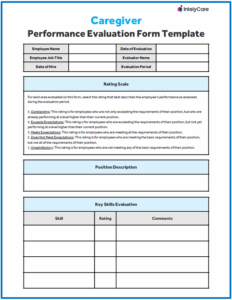
If you’re looking to have an impactful evaluation experience with your professional caregiving team, we can help. Let’s explore some of the essential aspects of a caregiver-specific evaluation process using a diverse set of examples and our customizable caregiver performance evaluation form template.
Caregiver Performance Evaluations: Process Considerations
The aging baby boomer generation has been labelled a “silver tsunami,” driving increased demands for healthcare. This particularly affects professional caregivers, who may experience an almost 50% demand spike in coming years. Since the job already requires a significant emotional (and often physical) toll, your evaluation meetings provide an opportunity to connect with your caregivers and ensure they have the resources they need to avoid burnout.
As many as 60% of caregivers experience burnout, so it’s important to angle evaluations toward combatting this major workforce issue. Utilizing a template can help streamline interviews and focus productivity measures, while also guaranteeing that crucial aspects of burnout mitigation and avoidance are addressed. Some of these measures include:
- Role clarity. Ascertaining that the caregiver isn’t being asked to perform outside of their assigned functions can help decrease additional tasks they may feel pressured to provide by clients and client families.
- Task management. This is an important item to address because it’s easy for caregivers to become overwhelmed by the number of activities they need to assist their clients with.
- Realistic goals. These make a big difference in a setting where compassion and the desire to help can often inflate goals beyond what’s reasonable.
Support is another important factor for burnout risk. By establishing routine caregiver evaluations, you’re showing up for potentially vulnerable employees, giving them the opportunity to ask for help where needed.
It’s also preferable to do your interview in-person. Studies demonstrate that face-to-face interactions can often increase influence and productivity. If that’s not available, virtual is still a viable option. Remote interviews offer the chance to connect while allowing paid caregivers to continue prioritizing work-life balance and the flexibility that often encouraged this particular line of work in the first place.
Documenting Caregiver Performance Evaluations: Examples and Tips
If you’re ready to strengthen your caregiver performance evaluations, templated approaches are a good way to maximize value. In this section, we’ll break down our professional caregiver performance evaluation form, providing samples and tips to help you feel confident in adapting it to your organizational needs.
1. Identifying Information
During this introductory piece of the caregiver performance evaluations sample, you may be tempted to gloss over identifying details. However, we recommend lingering here to highlight these key aspects of your caregiver’s employment. In a field where some caregiving business owners are hiring every day to ensure they have a sufficient workforce, longevity (even if it’s only in terms of months) is worth noting and celebrating.
Suggestions:
- If you host evaluations more often than annually (or early into new-hire onboarding), explain the reasons behind the frequent check-ins. Note the risk of burnout and your organizational attempts to combat isolation in this line of work.
- Use this time to help your recruitment strategies. After celebrating their tenure, include a pitch with incentives for any employee referrals. Consider asking for feedback on work satisfaction and what could be done to ensure their retention.
Example:
| Employee Name | Jaime Young | Date of Evaluation | 04/01/20xx |
| Date of Hire | 01/01/20xx | Evaluator Name | Shawn Miller |
| Employee Job Title | Caregiver | Evaluation Period | 01/01/20xx-03/31/20xx |
2. Rating Data
Although rating data can induce anxiety and may contribute to unease around evaluation experiences, giving attention to this information can help you tackle some of the major contributory factors of caregiver burnout. Here’s a chance to clearly define what excellence looks like, demonstrating that it’s realistic and achievable, versus the all-consuming sprint that some caregivers may feel is expected.
Suggestions:
- Utilize real-life examples within each section. An outstanding performance example may look like tailoring a bath routine to the unique client needs.
- Acknowledge that data from performance trackers such as GPS employee monitoring (during business hours) or electronic visit verification measures are part of the objective data used to influence fair, unbiased rating decisions.
Example:
| 5. Outstanding | This rating is for employees who are not only exceeding the requirements of their position, but who are already performing at a level higher than their current position. |
| 4.Exceeds Expectations | This rating is for employees who are meeting all of the requirements of their position, but not yet performing at a level higher than their current position. |
| 3. Meets Expectations | This rating is for employees who are meeting all of the requirements of their position. |
| 2. Does Not Meet Expectations | This is for employees who are meeting the basic requirements of their position, but not all of the requirements of their position. |
| 1. Unsatisfactory | This is for employees who are not meeting any of the basic requirements of their position. |
3. Skills Evaluation
A skilled caregiver balances the emotional aspects of their work alongside proper task management. Because much of your perspective on their related achievements may come from the client and family, it’s important to allow the caregiver space to speak to their own abilities. In a fair caregiver performance review, examples from multiple sources will be weighed to effectively establish the employee’s best skills, and those which might require attention. Some competencies to consider during your professional caregiver performance evaluations include:
- Interpersonal skills like patience and compassion, often displayed through the use of person-centered care and an individualized approach to care tasks.
- Task management, which is important in settings where clients can often afford a limited number of hours to achieve many important activities of daily living (ADLs) with a caregiver.
- Communication, a crucial component of effective caregiving. An excellent caregiver is adept at tailoring their conversations to meet their client’s needs.
- Client confidentiality and other compliance standards that are important for a caregiver to understand and maintain.
- Self-care, to ensure that they’re balancing their needs with that of their clients to protect their ability to participate in this career long-term.
Suggestions:
- Incorporate a caregiver job description template to reinforce expectations and ascertain that scope of practice isn’t being exceeded — a risk when clients need help with their medications and other needs that are outside the professional caregiver scope.
- In this section of the caregiver performance review, examples of potential resources and training are essential to help reinforce certain skills (such as safe lifting and mobility-assistance techniques).
Example:
| Skill | Rating | Comments | |||
| Caregiver Perspective:
Keeping Client Safe |
3 | The family has asked that my client never go out the front door because of his elopement risk. However, when he gets agitated and confused, the only way I can redirect him is with walks outside of the house. I’m able to effectively redirect the client, but not within the safety parameters set by the family. | |||
| Caregiving Leader Perspective:
Diffusing Difficult Situations |
5 | Caregiver Jaime effectively redirects a client with advanced dementia each time they become agitated and insistent on exiting their home. Combative tendencies have been noted during these situations but Caregiver Jaime maintains the client’s safety (and their own) throughout these tough instances. Though the family is concerned about the client leaving the home, they expressed that they feel Caregiver Jaime makes the right call, prioritizing safety by meeting the client’s immediate needs while mitigating the risk of elopement by remaining with the client and quickly redirecting them back home during each of these events. | |||
4. Goal Setting
Goal setting is a crucial feature of an effective professional caregiver performance evaluation form. Not only does it provide the chance to make sure that productivity aligns with the organizational mission and long-term goals, it can also reinvigorate a caregiver’s passion for the job.
Suggestions:
- Reinforce the necessity of measurable, achievable goals. Caregiving is a field of work that is very susceptible to unrealistic expectations due to the high emotions often at play. Counter the risk of those unintentional client- or family-based pressures by keeping goals very specific.
- Ensure that one of the caregiver goals is always focused on self-care and wellbeing. In a job known for its burnout rates, this is a great opportunity for advocacy and efforts that boost employee retention.
Example:
| Professional Development Goal | Improved confidence and trust in decision-making skills.
Rating: |
| Evaluator Comments | Caregiver Jaime will gain confidence in their professional abilities, giving more credit to the instincts that guide their decision-making skills. Resources for meditation techniques and mindfulness exercises were provided with opportunities for counseling presented as well. |
| Employee Comments | I will gain more self-confidence and appreciation for the work that I do on a daily basis by focusing on positivity and self-care. I plan to use one of the meditation guides provided today at least once per work shift and will reach out to the in-house counselor. |
Looking for More Ways to Develop Your Team?
Using your professional caregiver performance evaluations template, you’re ready to confidently navigate evaluations with these important members of your team. For more recommendations on inspiring your caregivers, IntelyCare has you covered with expert-backed facility guides and practice recommendations that you can access today.