Why a Male Nurse Shouldn’t Be a Rarity



Why are patients more likely to be cared for by a female nurse than a male nurse? While nursing has grown more diverse in the last few decades, women still make up more than 87% of the RN workforce and nearly 89% of the LPN workforce. Male nurses are, in no uncertain terms, a rarity.
In recent history, nursing and other service-based professions have been viewed as “women’s work.” It might surprise you, but men have been working as nurses since 250 BC. (Bet you didn’t know that Walt Whitman was a nurse.) Yet the perceptions of the last centuries can continue to color ideas about nurses today.
If you’re thinking of becoming a male nurse, you might be worried about entering a profession that is predominantly made up of women. You might be concerned about nurse stereotypes and sexism against male nurses. Yet there’s opportunity here for men who choose to follow this path and grow their career in nursing. Here are just a few of the reasons why the world needs more male nurses.
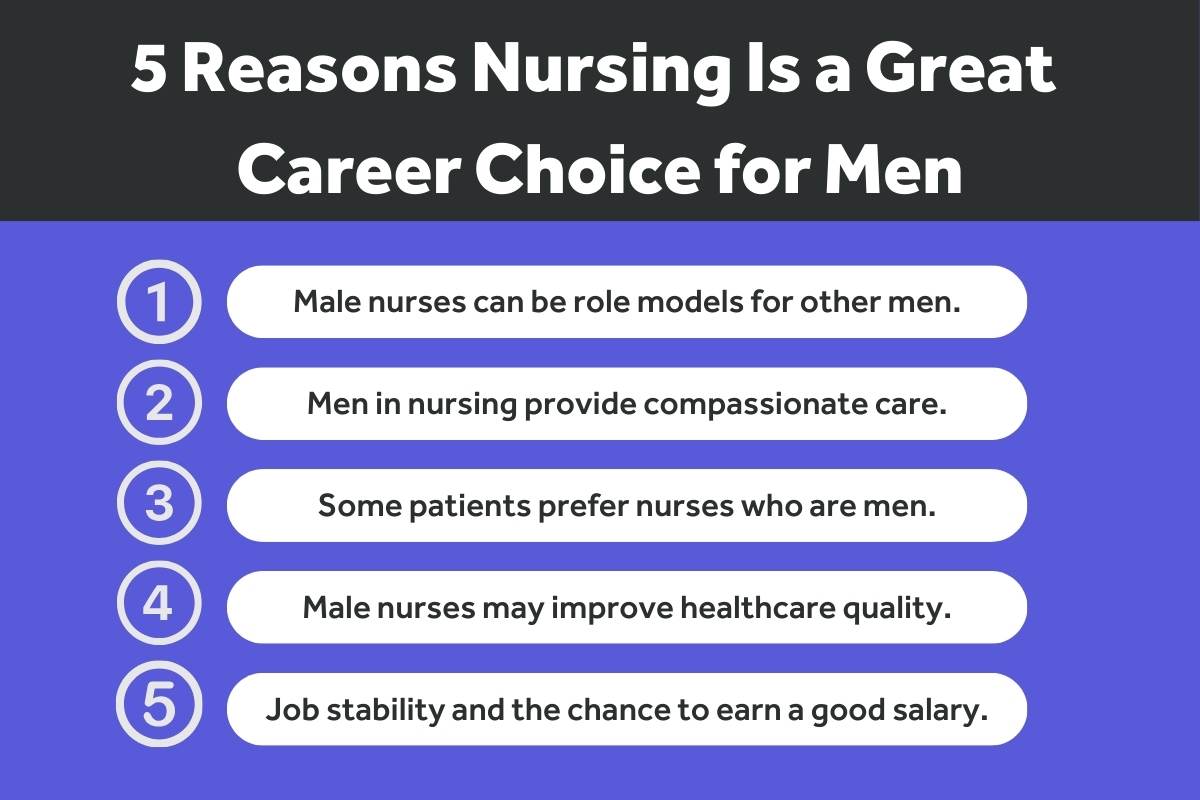
Why Men May Want to Choose a Career as a Nurse
1. Male RNs Can Be Role Models for Other Men
Unfortunately, gender stereotypes and sexism against male nurses still saturate our culture, leading many to believe that nursing is a job for women only. Men entering the profession help push the envelope, challenging stereotypes and perceived gender roles.
Men — such as nursing pioneer Luther Christman — can act as role models for younger generations, showing a kind of compassion, integrity, and determination that might not be found elsewhere. How would it feel to know that you’ve been a role model for other men entering the nursing profession? You’ll be following in the footsteps of many excellent men in nursing.
2. Men in Nursing Provide Compassionate, Nurturing Care
Some people may believe that men aren’t as emotionally equipped as women to handle the duties of a nurse. That simply isn’t true, but it’s a common myth ascribed to male nurses. Stereotypes like this are damaging.
Men absolutely have the capacity to be extremely attuned and sensitive to the needs of patients and to uphold ethical principles in nursing. The ability to comfort a crying toddler who is scared of needles or calmly reassure a person about to go into surgery is not (and never was) dependent on a person’s gender.
3. Some Patients Prefer a Male Nurse
Just like nurses themselves, patients come from all walks of life. As such, there may be patients from different cultural backgrounds that prefer having a man taking care of them. Some male patients might not feel comfortable discussing certain issues with women. Others may prefer a male clinician for certain invasive procedures, such as the insertion of a urinary catheter. Men in nursing can improve the patient care experience for some simply by identifying as male.
4. Having More Male Nursing Professionals May Improve Healthcare Quality
More men in the nursing profession may help improve patient outcomes and healthcare quality as a whole. Having a workforce that more accurately represents the population is essential for quality care. Several research studies suggest that men do not engage in preventative care because such concerns are considered female concerns.
Furthermore, some exams and procedures make men feel uncomfortable and vulnerable. The patient might be more inclined to participate in his preventive health if his nurse is also male. A man may even be more likely to follow treatment recommendations if they come from another man. We need more male nursing professionals to help improve the quality of care by bringing their unique perspective and talents into the profession.
5. There’s Job Stability and the Chance to Earn a Good Salary
Nurses are in demand, which is good news for your career. The Bureau of Labor Statistics predicts the job outlook for RNs will grow by 5% over the next decade and the job outlook for LPNs will grow by 3% over the next decade. That’s an increase of 189,100 and 54,400 job openings (respectively) each year, on average for the next 10 years.
In terms of pay, the average annual salary for RNs is $98,430 and the average annual salary for LPNs is $64,150. The best-paying states for RNs are:
The best-paying states for LPNs are:
Men in Nursing: FAQ
What are male nurses called?
Nurses who are men don’t have a different title or designation than nurses who are women — they’re simply called nurses. They may have the title of RN, LPN, staff nurses, travel nurse, etc. depending on their professional background and role.
Are male nurses rare?
Yes, but they’re growing less rare, and depending on the work setting, they may be more common. In the U.S. about one in 10 nurses is male, but male nurses may gravitate towards certain areas, such as intensive care and leadership, where you’ll likely find a higher percentage of men than in other areas.
Do male nurses make more money?
On average, yes. Even among nurses who have similar responsibilities and qualifications, male nurses tend to earn more than female nurses — some experts estimate by about $250 more per week.
Why does this gap exist? Across all professions, men earn more than women on average. Men are less likely to take a career break to care for family than women are, and male nurses tend to experience faster professional advancement. This may help explain why men make up 30% of the healthcare workforce, yet hold 75% of leadership roles.
What specialty has the most male nurses?
Some research shows that men are more likely to work in these nursing areas:
- Intensive care
- Emergency room
- Cardiac care
- Leadership and management
- Hospital and acute care areas
- Night shift roles
- Anesthesiology
- Surgery
- Education
Can a patient request a male nurse?
Certainly, patients may request a male or female nurse. However, certain units may have difficulty accommodating this request due to a low staff of male nurses.
Ready to Make a Difference?
Are you a male nurse looking for a fresh opportunity? Find out how we can save you time and energy by sending you nursing job opportunities that meet your criteria.