Nurses to Know: Mary Adelaide Nutting

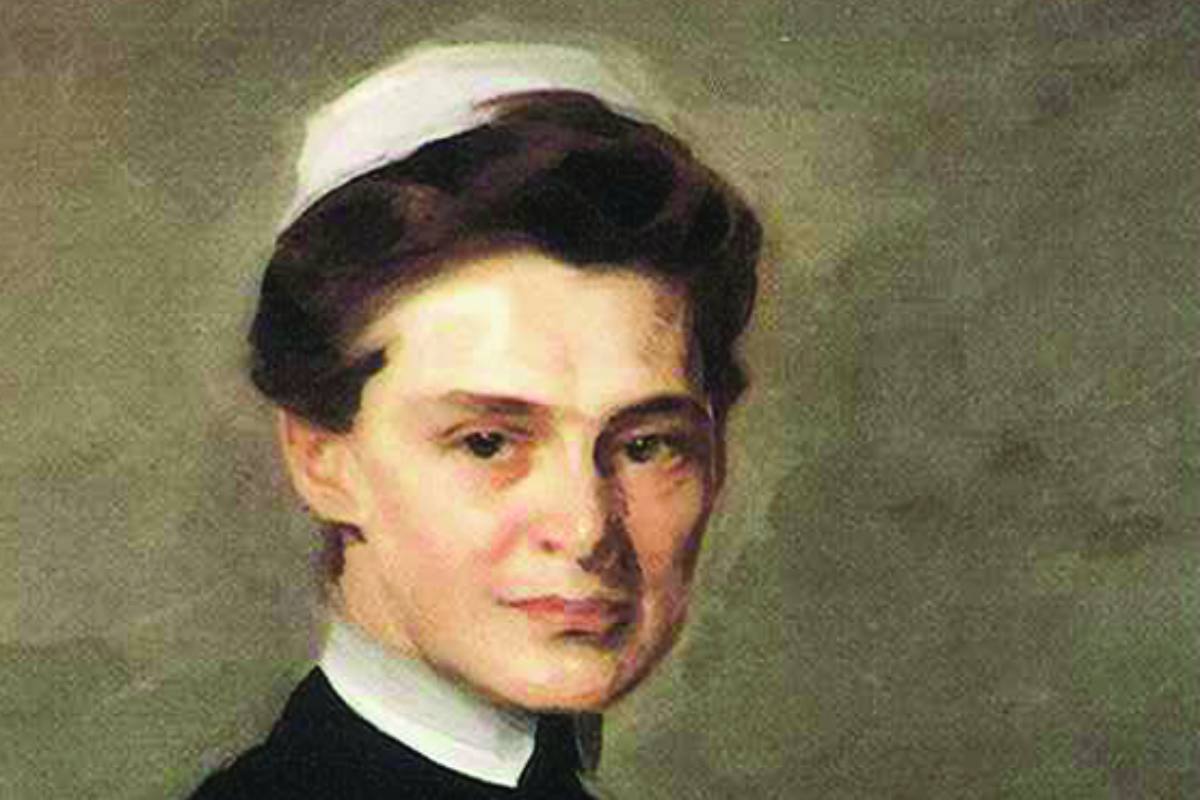
Mary Adelaide Nutting was the first ever nurse to chair a university, and helped found the organization that would become the National League for Nursing (NLN). Alongside longtime friends and colleagues Isabel Hampton Robb and Lavinia Dock, Nutting advocated for nursing education and professionalism, revolutionizing the way nurses were instructed at two key institutions.
The Life and Career of Mary Nutting
Early Career
Nutting was born in Waterloo, Quebec, in 1858. She was one of six children. In 1881, she was among the first graduating class of the Johns Hopkins School of Nursing. She would serve at Johns Hopkins Hospital as a nurse for two more years before becoming assistant superintendent of the nursing school. When Isabel Hampton Robb left the post of superintendent in 1894, Nutting was named as her successor.
In Nutting’s era, nursing education programs were run by hospitals, primarily as a cheap staffing source. Nursing students worked between 60 and 105 hours per week, with little focus on didactic learning and professional development. Nutting’s leadership would soon spark changes to these conditions.
As a leader at Johns Hopkins, Nutting made pivotal alterations to the nursing program there. She extended the program from two to three years, added a training period before clinicals, and limited nursing students’ work hours. She also established scholarships for students, as well as a professional and historic school library.
In 1900, Nutting helped establish The American Journal of Nursing, which remains the biggest and oldest circulating nursing journal. The next year, she introduced a new course in hygiene, practical nursing, anatomy and physiology, and medical treatments. These subjects formed the basis for modern prelicensure nursing education.
Mid-Career
Alongside Robb and Dock, Nutting was an early member of the American Society of Superintendents of Training Schools for Nurses of the United States and Canada. This organization would go on to become the NLN. Nutting served twice as the organization’s president while working at Johns Hopkins and teaching part-time at Columbia Teachers College.
Nutting not only had visionary leadership in nursing, but also in hospital administration and management. She drew inspiration from Florence Nightingale in her work as a statistician and advocate for nursing education. While working at Johns Hopkins, she authored several articles that were later published in A Sound Economic Basis for Nursing. Alongside Lavinia Dock, Nutting also wrote History of Nursing, a four-volume text published in 1907.
That same year, Nutting was appointed Professor of Institutional Administration at Columbia Teachers College, making her the first nurse to lead a university at that level. Robb, Dock, and Nutting created the first postgraduate nursing education program there, where they co-led a course on hospital economics, designing and teaching the class themselves.
Late Career and Retirement
In 1910, Nutting became head of the new Department of Nursing and Health at Columbia Teachers College. Within this department, she created programs on nursing, hospital administration, public health, and other fields, earning international recognition for the school.
Nutting remained an active member of the Johns Hopkins Nurses Alumnae Association and contributed to the magazine regularly. In 1915, she pushed for the endowment of the Johns Hopkins University School of Nursing, campaigning for university status for the school. Today, Johns Hopkins remains one of the leading nursing programs in the United States.
During World War I, Nutting was appointed by President Woodrow Wilson to serve as Chairman of the Nursing Committee. Her organization helped coordinate services and boost the supply of nurses. She was awarded an honorary Master of Arts from Yale in 1921 for her service in public health and nursing education.
Nutting retired from her position at Columbia in 1925. She was awarded a medal by the NLN in her name in 1944 and was named honorary president of the Florence Nightingale International Foundation that same year. Nutting died in October 1948 in White Plains, New York.
Mary Adelaide Nutting: Contributions to Nursing
Nutting was a visionary, a leader, and a feminist in an era where society held limited views of what women could do and the value of their intellect and work. Alongside her friends and colleagues, Nutting helped initiate the pursuit of professionalism in nursing in the United States. These women were working-class people who used their emotional intelligence and skills to lead nursing into a new era.
Nutting laid the basic template that modern nursing schools use today: pre-clinical (or prerequisite) courses, practical nursing education, and real-world practice to reinforce learning. Rather than allow the hospital to continue using nursing students as cheap labor, she advocated for students to spend more time in preparation for practice.
Today, the NLN continues to bestow the Mary Adelaide Nutting award for teaching and leadership in nursing education, and Nutting’s writings on nursing history are still considered some of the leading texts on the subject. The impacts of her work continue to be seen in nursing education, innovation, and scholarship.
Feeling Inspired by Mary Adelaide Nutting?
Nutting’s pioneering work in nursing education helped bring the profession to where it is today. If you’re ready to lead in a new role, we can help. Sign up for personalized nursing job notifications to be alerted to new opportunities in your area and specialty.
Image source: Johns Hopkins School of Nursing