Nurses to Know: Mary Eliza Mahoney, the First Licensed Black Nurse in the U.S.

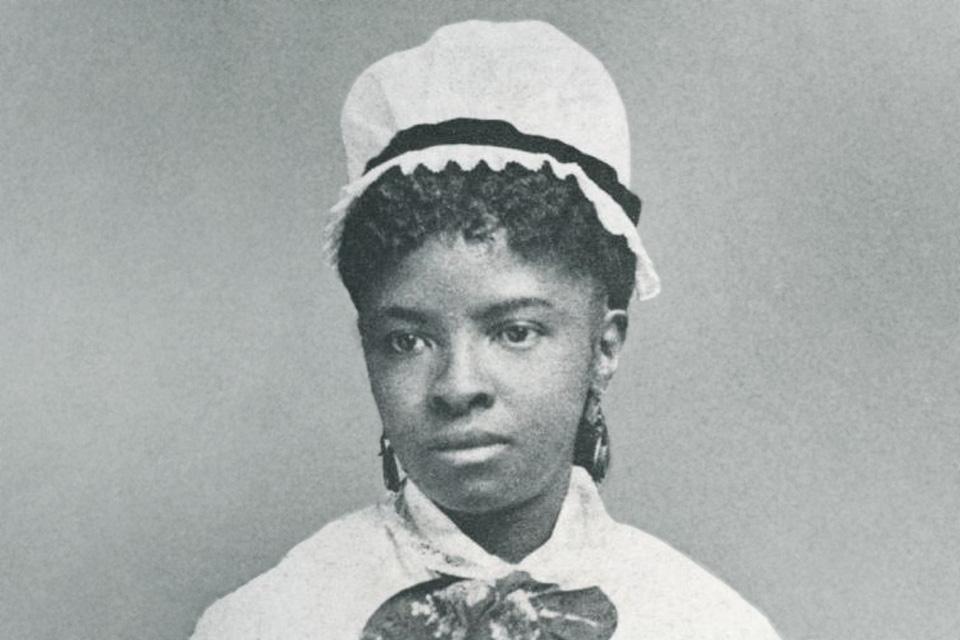
Mary Eliza Mahoney is best known as the first Black nurse to be professionally licensed in the United States. She was also an original member of an organization that would become the American Nurses Association (ANA). Mahoney was a fascinating figure who continues to inspire nurses today. Learn more about her story and the key contributions she made to nursing.
Mary Eliza Mahoney: Nurse and Trailblazer
Early Life
Mahoney was born May 7, 1845, in Dorchester, Massachusetts, to parents who left North Carolina after being freed from slavery. As a 10-year-old, she attended one of Boston’s first integrated schools, and went on to work at the New England Hospital for Women and Children as a teenager and young adult.
This facility was one of the first to employ an all-women staff of physicians, and is now Dimock Community Hospital. Mahoney worked there as a maid, janitor, cook, washerwoman, and nurse’s aid, often on 16-hour shifts. Her early work experience likely influenced her decision to pursue a nursing education.
Education and Early Nursing Career
Formal training for nurses was just beginning at this time. During the Civil War (1861–1865), female nurses were called upon to help the sick and injured, and women proved to be an invaluable part of the war effort. Nurse-leaders like Harriet Tubman, Lucy Higgs Nichols, and Clara Barton showed how courageous, capable, and essential women could be.
After the war ended, the American Medical Association concluded that nursing education was just as important as physician training. The upshot of this for Mahoney was that, in 1872, New England Hospital for Women and Children established one of the first nursing schools in the U.S. At 33 years old, Mahoney began the hospital’s rigorous nursing program, and was one of four nurses to graduate from an original class of 42 students.
Mahoney experienced discrimination in public nursing roles after graduation and worked as a private duty nurse, working with affluent families to care for postpartum women and infants. She remained active in nursing advocacy and became an original member of the Nurses Associated Alumnae of the United States and Canada (NAAUSC) before the organization became the ANA in 1911. Later in life, she served as director of the Howard Orphanage and Industrial School in Kings Park, Long Island.
Later Career and Awards
Throughout her career and life, Mahoney worked to challenge discrimination in the nursing field and to promote leadership among Black nurses. She co-founded the National Association of Colored Graduate Nurses (NACGN) in 1908, and due in part to Mahoney’s recruitment work, the number of African American nurses doubled between 1910 and 1930.
Mahoney’s nursing career spanned 40 years of service, and she remained active in civil rights and care equity advocacy after retirement. One of the most famous Mary Eliza Mahoney quotes is, “Work more and better the coming year than the previous year,” showing her dedication to growth and improvement. In 1920, she was one of the first Boston women to vote after the women’s suffrage movement.
Mahoney died in January of 1926, at the age of 80. The NACGN created the Mary Mahoney Award in 1936. The NACGN merged with the ANA in 1951, and the award continues to be given every other year to acknowledge nurses who contribute to equity in nursing. In Oklahoma City, The Mary Mahoney Health Center was named in her honor in 1973, and in 1976, she was inducted into the ANA Hall of Fame. The National Women’s Hall of Fame inducted her in 1993.
Nursing and Civil Rights
Mahoney’s life sits at the intersection of two ongoing stories: the evolution of nursing as a profession, and the long struggle for civil rights in America. The late 19th century saw nursing shift from informal caretaking to a structured, skilled profession with standardized education and clinical training. At the same time, emancipation and the beginning of integration signalled massive shifts towards justice and equality.
By excelling within one of the earliest formal nursing programs in the country, Mahoney helped shape nursing’s move toward legitimacy and expanded its definition to include women of color. Mahoney’s achievements showed people what was possible, and signalled an advancement in who was allowed to belong in the emerging nursing profession.
Other Inspiring Nurses to Know About
Looking for other leaders like Mary Eliza Mahoney? Contributions to nursing impact the public as well as the nursing profession. Civil rights, equity, and compassion are all core ethical principles in nursing. The following leaders have helped evolve the nursing profession into what it is today:
- Linda Richards
- Mary Seacole
- Susie Walking Bear Yellowtail
- Mary Ann Bickerdyke
- Hazel Johnson-Brown
- Margaret Sanger
- Walt Whitman
- Dorothea Dix
- Florence Nightingale
Inspired by Mary Eliza Mahoney?
Nurses in every setting have the opportunity to advance care and advocate for patients of all walks of life. If you’re curious about nursing roles near you, learn more with personalized job notifications that alert you to roles that fit your needs.