Nurses to Know: Linda Richards, America’s First Formally Trained Nurse

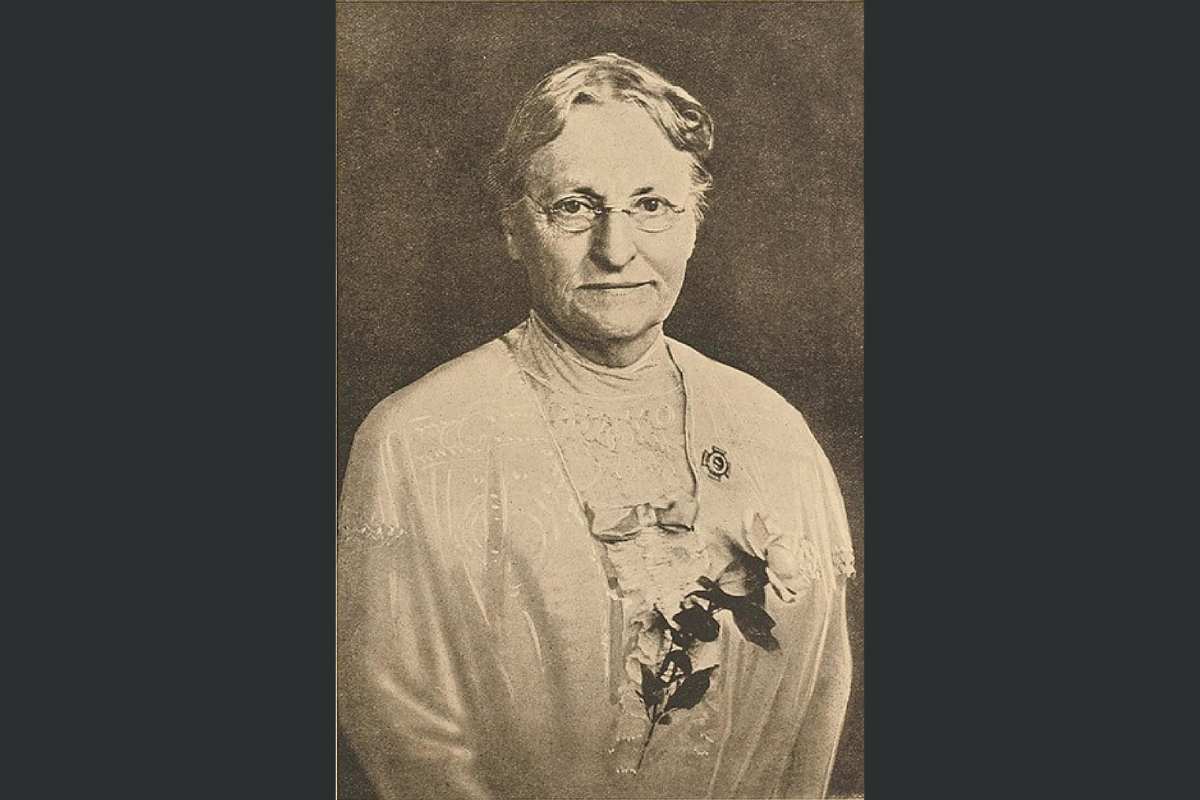
Known as the first formally trained nurse in the United States, Linda Richards ushered in a shift in the nursing profession towards educational attainment. But her accomplishments go way beyond this single achievement, and throughout her career, she made innovations in documentation and medical record-keeping that changed nursing practice forever. Learn more about her life and contributions to the field.
Linda Richards: Nurse Trailblazer
Early Life
Richards was born 1841 in Lawrence County, New York. The family moved to Minnesota when Linda was four years old. Not long after arriving, her father, a preacher, died, and her mother moved the family to Vermont. A decade later, her mother became sick and bedridden, and Richards cared for her until her death in 1855. Richards was only 14 years old, but she displayed enough skill that the local doctor noticed her abilities and began bringing her on rounds to see patients.
During this period of the mid-1800s, nursing was a much more informal arrangement, often without pay. Richards was referred to as a “born nurse”— a natural caregiver who was called on by neighbors when they needed help with an injury or illness. She was proud to assume this role in her community before becoming a teacher as a young adult.
In 1861, the Civil War broke out. Nurses like Lucy Higgs Nichols and Harriet Tubman were essential during the war effort, and expanded the American perception of who could lead. This period would form a catalyst for Richards’ nursing career: She noted, “My desire to become a nurse grew out of what I heard of the need of nurses in the Civil War.”
Richards wanted more training as a nurse, but no programs existed at the time. She began work as an assistant nurse at Boston City Hospital, but was disappointed with both the scope of her duties and the care she witnessed being given. Nurses gave medications without understanding their effects, and were asked to supervise patients, but didn’t have the skills to notice the signs of illness. Richards felt frustrated, knowing that care could be better than it was.
In 1872, Richards enrolled in the first class of the New England Hospital for Women and Children’s nursing training program in Boston. The program was rigorous — Richards was on duty 24 hours a day, sleeping in small rooms between wards, with an afternoon off every two weeks. She was the first of five students to finish the year-long training and received her nursing diploma in 1873. Several years later, Mary Eliza Mahoney would become the first formally trained Black nurse through the same program.
Early Career
After graduation, Richards became a night supervisor at Bellevue Hospital in New York City, a facility primarily caring for the poor, mentally ill, and patients experiencing addiction. Here, she noticed a critical issue: vital signs, orders, and assessments were all communicated verbally between physicians, nurses, and support staff. Richards began creating written records of her patients, and the practice spread throughout the facility.
About a year after accepting the position at Bellevue, Richards took a role to lead the nurse training school at Massachusetts General Hospital. Hiring her was a test to determine whether programs could be nurse-led, as they’d been operated by physicians in the past. Within a few years, Richards’ leadership shifted nursing practice at the entire facility, and physicians were regularly asking nurses to join them in rounding on patients.
In 1877, Richards got to meet her idol and fellow nurse leader, Florence Nightingale, while training at St. Thomas’ Hospital and King’s College Hospital in London. The two of them shared ideas about ways to improve nursing, and both believed in rigorous nurse training. After touring other hospitals in Paris, Richards returned to the States to take a position as hospital matron and training supervisor at her old employer, Boston City Hospital.
There, (according to the Adirondack Almanac) she worked towards strengthening the nursing program, but met resistance from staff members who weren’t ready for change. She ended up leaving after a year and a half, but three years later, she returned to find the work she’d done there paid off: She saw a “wonderful transformation in hospital and training school methods.”
Later Career
Richards would go on to work two more stints at Boston City Hospital before heading to Japan to serve with the American Board of Missions. She designed a two-year training course in Tokyo, and by the time she left five years later, the roots of modern nursing in Japan were planted and growing.
Upon her return to the United States, Richards continued to lead and reform nurse training programs for another 20 years. She developed programs in Pennsylvania, Massachusetts, New York, Connecticut, and Michigan. When speaking about the massive shift she’d seen in nursing since the early 1870s, Richards said it was a “revolution of feeling toward training schools and trained nurses.”
In 1895, Richards became president of the newly founded American Society of Superintendents of Training Schools for Nurses, and later returned to work at Taunton Hospital in Massachusetts before retiring at age 70. Her autobiography, Reminiscences of Linda Richards, was published in 1911.
Linda Richards suffered a stroke in 1925, and received nursing care at the same school that initially trained her — the New England Hospital for Women and Children. She died in April 1930. At Richards’ memorial service, Dr. Alfred Worcester, a longtime friend, stated:
“To have been given the earliest American nursing diploma may have been, as she used to say, merely because she happened to be the first one to begin training. But it was by no mere chance that Linda Richards started so many of our now famous training schools, nor was there anything haphazard in her having been given the task of starting trained nursing in Japan … Miss Nightingale said of her: ‘I have seldom seen anyone who struck me as so admirable. I think we have as much to learn from her as she from us.’”
Richards earned numerous awards and honors throughout her life and after her death. In 1976, alongside Dorothea Dix, she was inducted into the American Nurses Association (ANA) Hall of Fame. She was named in the National Women’s Hall of Fame in 1994. She is credited with creating written patient records, creating nurse uniforms in the U.S., and purchasing the first stock share in the American Journal of Nursing.
Lasting Impacts
Today, Linda Richards’ legacy lives on in every nursing school curriculum, bedside note, and patient record. It’s hard to imagine modern nursing without her ideas. Her trailblazing work helped transform the profession from informal caregiving into a profession with standards, systems, and educational rigor, laying the groundwork for the nursing field as we know it.
Want to learn more about nurses who shaped what the profession is today? See our other articles about nurse leaders and theorists:
- Mary Seacole
- Susie Walking Bear Yellowtail
- Clara Barton
- Walt Whitman
- Edith Cavell
- Betty Neuman
- Patricia Benner
Looking for a New Nursing Opportunity?
Linda Richards made a lot of career shifts throughout her life — and you can, too. If you’re ready for something new, sign up for personalized job notifications that let you know when great roles open up in your area.