Nurses to Know: Lillian Wald, the Founder of Public Health Nursing


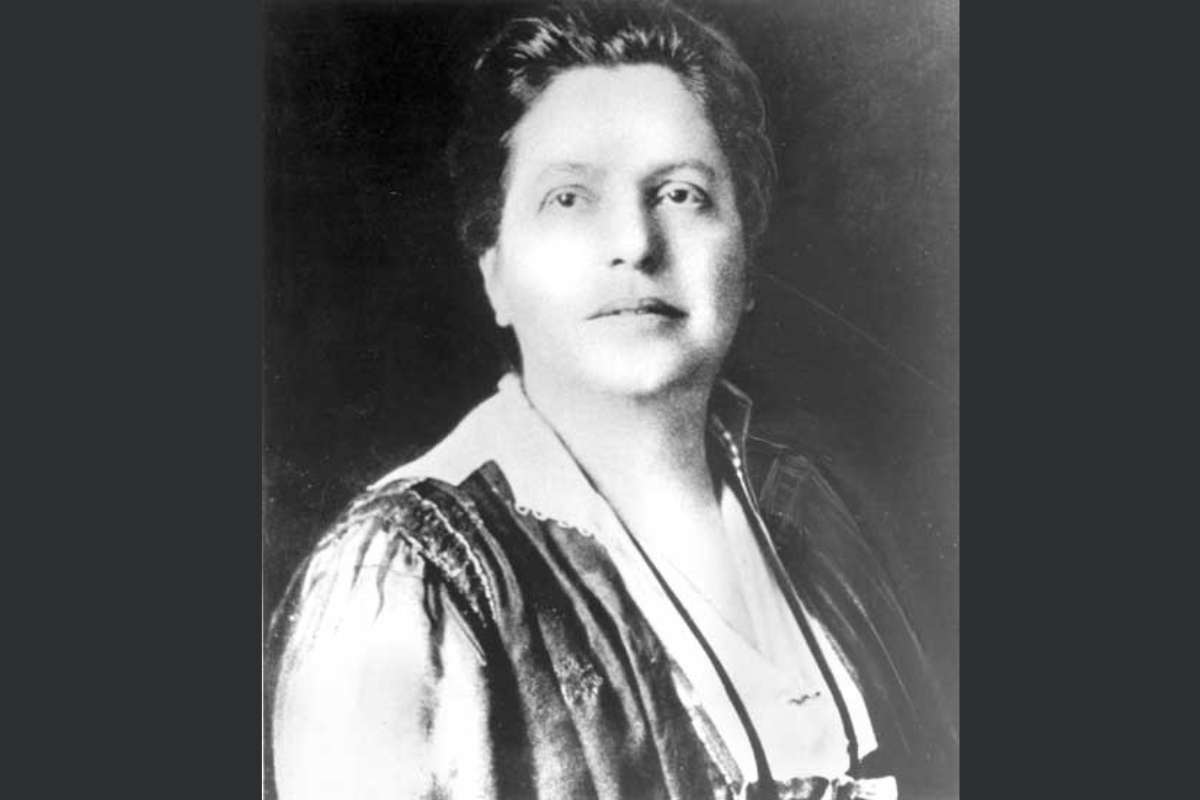
Instead of waiting for patients to come to a hospital, Lillian Wald believed nurses should go into neighborhoods to provide the care, education, and support where it’s needed most. This radical idea led her to establish the Henry Street Settlement, a pioneering community center that provided nursing care and social services to impoverished families in New York City. Through this work, Wald became widely recognized as the founder of public health nursing, bringing medical care directly into people’s homes and daily lives.
So, what did Lillian Wald do for nursing, and why does her work still matter today? This article explores her life, her groundbreaking contributions, and the legacy she left behind.
The Life of Lillian Wald
Early Life
Lillian D. Wald was born on March 10, 1867, in Cincinnati, Ohio, to a well‑off German‑Jewish family. Her parents, Max and Minnie Wald, gave her a warm and nurturing upbringing. She later described herself as a “spoiled” child, growing up in a home full of music, books, and laughter. The family later moved to Rochester, New York, in 1878, a city that Wald considered her hometown.
Growing up, Wald was encouraged to explore and ask questions. She was especially close to her grandfather, Schwarz, who entertained her with stories and indulged her curiosity with thoughtful gifts. Excelling in nearly every subject, she boldly applied to Vassar College at age of 16, only to be turned away for being too young.
Instead of letting this hold her back, Wald embraced adventure — spending the next six years traveling widely and briefly working as a newspaper reporter. It wasn’t until 1889, when she met a young nurse, that her path suddenly came into focus.
Nursing Career
At the age of 22, she left for New York City to train as a nurse at the New York Hospital Training School for Nurses, graduating in 1891. She then spent a year working as a nurse at the New York Juvenile Asylum before continuing her education with additional courses at the Woman’s Medical College in 1892.
While organizing home-nursing classes for poor immigrant families on the Lower East Side, Wald walked into overcrowded tenements filled with illness, poverty, and despair. Many families lived in tiny, poorly built tenements — apartments of just a few hundred square feet housing entire families of 10 or more. Witnessing these harsh conditions firsthand convinced her that nursing couldn’t be confined to hospitals — it had to go directly into the communities.
In 1893, she and her friend Mary Brewster made a bold decision— they moved into the College Settlement House on the Lower East Side and fully dedicated themselves to help people in the community.
“We were to live in the neighborhood as nurses, identify ourselves with it socially, and, in brief, contribute to it our citizenship,” Wald said. That same year, she coined the term “public health nurse” to describe nurses who care for patients beyond hospital walls.
With the support of donors, Wald and Brewster founded the Visiting Nursing Service of New York, bringing affordable and compassionate healthcare directly to the neighborhood’s homes. But Wald’s vision went further — she wanted a place where people could come together, learn new skills, and find support for their families. This idea grew into what would become the Henry Street Settlement.
To bring her vision to life, Wald reached out to leaders in the Lower East Side’s German-Jewish community, asking them, “Have you ever seen a starving child cry?” Her plea caught the attention of American financier and philanthropist Jacob Schiff, who donated three Federal-style row houses he owned on Henry Street and had them converted for public use.
In 1894, Wald and Brewster officially established the Henry Street Settlement, a center dedicated to nursing care, education, and social services. Additionally, the Settlement offered classes, playgrounds, and clubs, providing a safe and supportive space for children and adults.
Support from wealthy women and prominent philanthropists helped the Henry Street Settlement expand rapidly. The team grew to include more than 50 nurses, and additional houses were opened across the city, along with convalescent homes in the countryside. In 1906, Wald hired the Settlement’s first Black nurse, and the number of Black nurses on staff steadily increased over the years.
By 1913, the Henry Street Settlement had grown to seven buildings with two satellite centers, serving thousands through classes and making hundreds of thousands of home visits each year. Wald also opened the Settlement to social reform efforts, including meetings for the National Association for the Advancement of Colored People (NAACP), showing her commitment to justice and equality beyond healthcare.
By the time Wald retired in 1933, the Henry Street Nursing Service employed 265 nurses who cared for roughly 100,000 patients.
Continuing Legacy
Beyond healthcare, Wald was a tireless advocate for social reform, helping to create the United States Children’s Bureau, the National Child Labor Committee, and the National Women’s Trade Union League. She fought for women’s rights and for improving workplace safety and the lives of children, immigrants, and laborers.
During World War I, she chaired the Committee on Community Nursing of the American Red Cross and later led efforts against the deadly 1918 Spanish Flu. Wald also represented the U.S. at international Red Cross meetings, sharing her bold vision of public health across the globe.
Wald received widespread recognition for her work. In 1922, the New York Times named her one of the 12 greatest living American women, and she later received the Lincoln Medallion as an “Outstanding Citizen of New York.”
When Wald passed away on September 1, 1940, at the age of 73, thousands attended public and private ceremonies in her honor, including a tribute at Carnegie Hall with speeches from the governor and mayor praising her lifelong dedication.
Who Is Lillian Wald, the Angel of Henry Street?
Nicknamed the Angel of Henry Street, Wald didn’t just provide medical care — she also built a community. Wald believed that health, education, and social support were deeply connected, and she worked tirelessly to create programs that improve not only physical well-being but also the quality of daily life for families living in poverty.
The Visiting Nursing Service of New York, which she helped launch, eventually moved uptown and grew into the largest not-for-profit home healthcare organization in the country. Through her visionary work, she built a blueprint for public health nursing, setting a national standard for community-based care.
Through all of these efforts, Wald transformed the very idea of nursing. She proved that nurses could be community leaders, educators, and advocates, not just caregivers confined to hospital walls. Her work continues to influence public health, social work, and community-based healthcare programs today.
Lillian Wald Quotes
Wald’s words offer a window into the passion, compassion, and vision that defined her life. Here are some noteworthy quotes from this famous nurse:
- Reform can be accomplished only when attitudes are changed.
- Ever since I have been conscious of my part in life, I have felt consecrated to the saving of human life.
- Women are here to reaffirm their protest against war, to restate their unalterable faith in the righteousness of peace.
- The task of organizing human happiness needs the active cooperation of man and woman: it cannot be relegated to one half of the world.
Get Inspired by Famous Nurses
Looking to explore the lives of more famous nurses? Discover our full articles on other remarkable figures who shaped the profession:
- Clara Barton
- Mary Breckinridge
- Linda Richards
- Florence Nightingale
- Hildegard Peplau
- Harriet Tubman
- Mary Eliza Mahoney
- Susie Walking Bear Yellowtail
- Virginia Henderson
- Walt Whitman
Build Impactful Nursing Career With IntelyCare
Inspired by Lillian Wald? IntelyCare helps nurses find rewarding job opportunities where you can make a real difference, grow professionally, and love the work you do. Start exploring exciting new paths today.