How to Become a Burn Unit Nurse

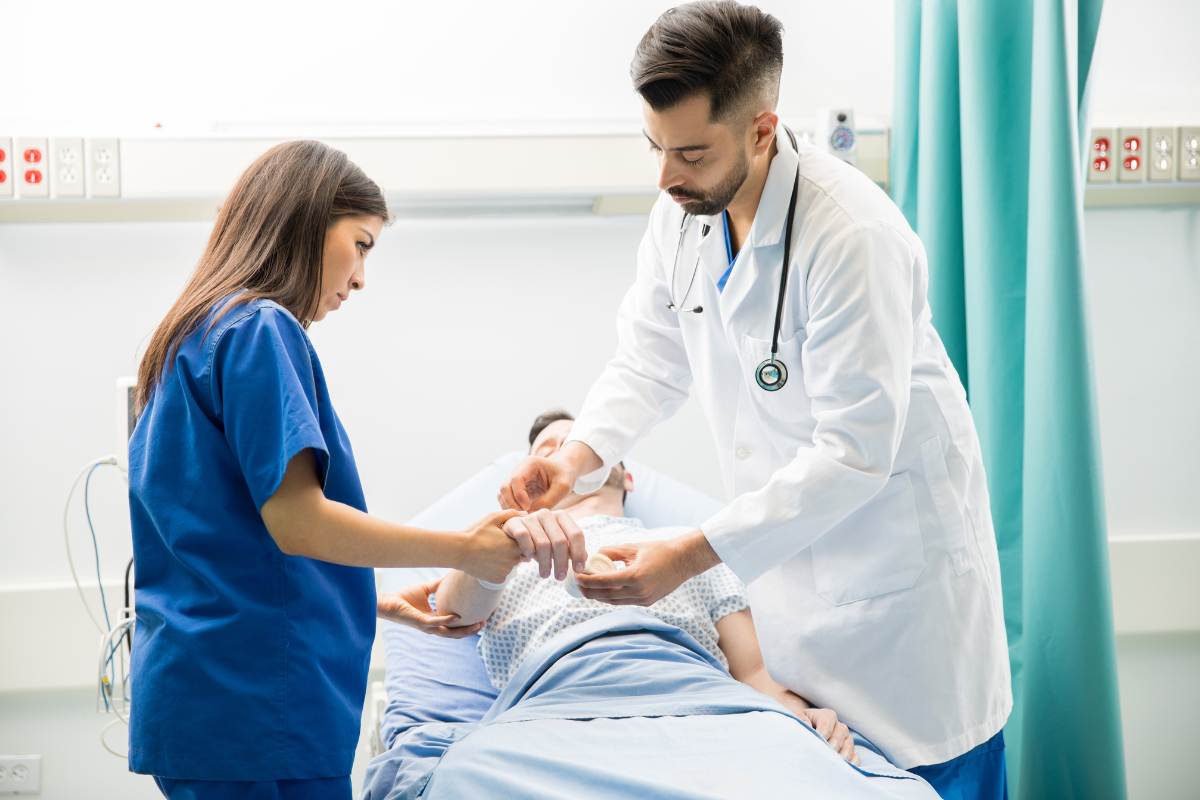
Picture this: A patient is rushed into the hospital with burns covering 30% of their body, and their blood pressure is dropping fast. As a burn unit nurse, you’re at the center of the response — stabilizing vital signs, managing fluid resuscitation, and preparing for the delicate wound care that follows.
Beyond the immediate crisis, you’ll manage pain, prevent infection, and monitor for life-threatening complications like sepsis or organ failure. If this sounds like the kind of high-stakes, meaningful work you want to do, burn nursing could be your calling.
Ready to learn how to become a burn care nurse? This guide walks you through the education requirements, job responsibilities, salary potential, and work opportunities.
Burn Unit RN: Career Snapshot
- Role: Treat and manage burn-related injuries
- Duties: Stabilize critically ill patients, manage fluid resuscitation, perform wound care, monitor for infection or organ failure, and manage pain
- Workplaces: Burn units in hospitals, trauma centers, specialized clinics, and rehabilitation facilities
- Path: Nursing degree, experience in acute care settings, followed by optional certification in burn or trauma care
- Timeline: Approximately 2 to 4 years
What Is a Burn Unit Nurse?
A burn care nurse is a specialized registered nurse (RN) who cares for patients who have experienced various degrees of burn injuries. These professionals may work with critically injured patients — burns covering 10% of a child’s body or 15–20% of an adult’s body can be considered severe and may require intensive monitoring — or in post-acute care settings, helping patients restore mobility, manage scarring, and regain independence.
Your burn unit nurse responsibilities will vary significantly depending on the acuity level of patients you are working with. Burn injuries are typically categorized into three types:
- First-degree burns affect only the outer layer of skin (epidermis), causing redness and pain.
- Second-degree burns extend into the second layer of skin (dermis), resulting in blistering, pain, and swelling.
- Third-degree burns penetrate all layers of skin and may damage the underlying bones, muscles, and tendons, often leaving a white, leathery, or charred appearance with little to no sensation due to destroyed nerve endings.
What Are Typical Burn Care Nurse Daily Responsibilities?
So, what is a typical day in the life of a burn unit nurse like? In addition to typical nursing tasks like completing head-to-toe assessments and administering medications, you’ll perform several specialized tasks, including the following:
| Responsibility | Description |
|---|---|
| Acute burn stabilization | Manage critically injured patients, including fluid resuscitation, monitoring for shock, and supporting airway or respiratory needs. |
| Specialized wound care | Perform burn debridement, apply advanced dressings, and assist with skin grafts or other specialized procedures. |
| Infection control | Implement strict infection prevention protocols to reduce the risk of sepsis and other complications in burn wounds. |
| Pain management | Administer and monitor pain control measures, including IV analgesics and sedation when necessary. |
| Rehabilitation support | Assist patients with mobility exercises, scar management techniques, and functional recovery during post-acute care. |
| Patient monitoring | Track vital signs and lab results closely to identify early signs of complications such as organ failure, electrolyte imbalances, or graft rejection. |
Where Do Burn Nurses Work?
These professionals are employed in a range of specialized healthcare settings where they manage complex burn cases. Typical workplaces include:
- Burn centers: Dedicated hospital units that provide comprehensive care for patients with severe burns, including emergency stabilization and surgical interventions.
- Trauma centers: Facilities equipped to handle severe injuries, including burns.
- Emergency departments: Hospital ERs see acute burn cases, and burn nurses may assist in initial stabilization and transfer to specialized units.
- Rehabilitation facilities: Post-acute care centers where patients undergo rehabilitation to regain mobility and adapt to daily life after serious injuries.
How to Become a Burn Unit Nurse: Training and Requirements
Intrigued by this career path? Here’s a step-by-step guide to entering this meaningful nursing specialty.
1. Get a Nursing Degree
Your training starts with earning a nursing degree. You can pursue an Associate Degree in Nursing (ADN), which usually takes around two years to complete, or a Bachelor of Science in Nursing (BSN), which typically takes four years. Throughout your studies, you’ll take courses in anatomy, pharmacology, and patient assessment, while gaining hands-on experience through clinical rotations.
2. Obtain Licensure
After earning your nursing degree, your next step is to pass the NCLEX-RN, which is the national certification exam for RNs. This exam tests your competency in essential nursing skills, ensuring you’re prepared to care for patients safely in real-world healthcare settings. Once you pass, you are officially a licensed RN eligible to work in a range of entry-level clinical roles.
3. Gain Experience
Before specializing in burn care, it’s important to build a solid foundation in essential nursing skills, such as inserting IVs, managing fluids, monitoring vital signs, and providing wound care. Here are some specialties that provide opportunities to hone these skills:
4. Attain Burn Unit Nurse Certification (Optional)
While not always required to work in the specialty, obtaining certification in burn or trauma nursing (TCRN) can boost your professional credibility and open doors to top roles in the field. The Certified Burn Registered Nurse (CBRN) credential, offered by the Board of Certification for Emergency Nursing (BCEN), is a widely recognized certification that validates your expertise, including knowledge of best practices in burn management and advanced treatment protocols.
To be eligible to sit for the CBRN exam, you must hold a current, unrestricted RN license. BCEN also recommends having at least two years of specialty-specific experience, though it’s not mandatory.
5. Pursue Advanced Education (Optional)
Wanting to move into leadership roles within burn care? A Master of Science in Nursing (MSN) or a Doctor of Nursing Practice (DNP) can open doors to advanced practice roles such as nurse practitioner (NP) or clinical nurse specialist (CNS). Advanced education also equips you with skills in research, education, and healthcare policy, enabling you to influence burn care practices on a larger scale.
Want Is a Typical Burn Unit Nurse Salary?
In the U.S., burn care nurses usually make around $84,000 annually. Your earnings, however, can be influenced by several factors, including your educational background, professional experience, and whether you work in a hospital, specialty clinic, or community care setting.
Geographic location is another major factor, with certain states offering notably higher salaries for nurses. Here are some examples of such states:
What Is the Role of a Nurse in a Burn Unit? FAQ
Is a burn unit an ICU?
The terminology can vary between hospitals. Some hospitals may have burn ICUs for critically ill patients, while other facilities may have designated units that care for less severe burn cases and may not provide full ICU-level monitoring.
What are verified burn centers?
In the U.S., burn centers can earn American Burn Association (ABA) verification, indicating they meet the highest standards of care for burn patients from initial treatment to rehabilitation.
What is the career outlook for nurses in this field?
The demand for registered nurses in the U.S., including those specializing in burn care, is projected to grow by about 6% over the next several years. This growth rate is faster than the average for all occupations.
How common are burn injuries in the U.S.?
Burn injuries are very common — in the U.S., someone sustains a burn serious enough to require treatment approximately every minute, totaling an estimated 486,000 injuries each year.
How are children affected by burn injuries?
Children under 16 make up roughly 26% of all burn center admissions, with the youngest — especially those under 4 — at the highest risk due to limited motor skills, inability to self-rescue, and reliance on adult supervision.
Why are children and older adults more vulnerable to burns?
Children and older adults have thinner skin, which can result in deeper burns at lower temperatures or shorter exposure times. Children also have smaller bodies, meaning burns can cover a larger percentage of their total body surface area. Older adults face additional risks due to slower reaction times, limited mobility, and pre-existing health conditions.
What are the causes of burns?
Burns can occur from a variety of sources, each requiring specific care and attention depending on the type and severity. Each type also has different prevalence and risks:
- Thermal (86% of burns): Caused by heat sources such as fire, hot liquids, or hot objects. About 43% result from fire or flames, 34% from scalds, and 9% from contact with hot objects.
- Electrical (4% of burns): Result from contact with electrical currents.
- Chemical (3% of burns): Caused by exposure to strong acids, alkalis, or other corrosive substances.
- Other (7%): Include radiation burns, friction or abrasive burns, and other less common types.
Annually, approximately 3,400 patients in the U.S. die from burns or related complications such as smoke inhalation, carbon monoxide or cyanide poisoning, organ failure, or infection.
Customize Your Nursing Jobs Search With IntelyCare
Looking to start a career as a burn unit nurse or explore other specialties? Let our smart job-matching system cut through the clutter and connect you to the nursing roles you’re looking for — ones that fit your needs and wants. Personalize your job search today.