7 Ways to Demonstrate Accountability in Nursing


Every nurse has felt it — a drop in your stomach with the realization that you’ve made an error. You’re human, and no one is perfect. Maybe it’s small enough that you can correct it and avoid hurting a patient, or maybe it’s critical. But what happens next? Taking responsibility is part of being a nurse. One of the lessons you must learn is how to demonstrate accountability in nursing.
As members of the most trusted profession, nurses carry a responsibility to uphold seven ethical principles. One of them is being responsible for your actions — not just taking blame when something goes wrong, but also learning from your mistakes and prioritizing patient safety all the time. In other words, taking accountability.
What Does It Mean to Have Accountability As a Nurse?
Being accountable in nursing means taking ownership of your decisions, communicating clearly, and being proactive about learning and improving. It means owning your level of knowledge, whether you’re a new graduate or an experienced nurse, and being honest when you need help. Accountability serves as a central guidepost, rooting your practice in humility and responsibility.
There are four elements of accountability to be aware of as a nurse.
1. Professional Accountability
Nurses must follow the standards and codes set by regulatory bodies, such as the American Nurses Association (ANA) and state nurse practice acts. Nurses are expected to be competent, ethical, and keep patients in mind at all times. Professional accountability in nursing ensures that standards of care are met.
2. Ethical Accountability
Ethical accountability is the moral obligation nurses have towards their patients and society. It includes concepts like beneficence and justice. Nurses must make decisions that respect patients’ rights and dignity, ensuring that care is centered around the patient and their goals.
3. Legal Accountability
Nurses serve the public and have a duty to practice ethically or face legal ramifications for their actions. This means they must operate within the boundaries of the law, and that a lapse in judgement or ethics that leads to malpractice can result in legal consequences.
4. Employment Accountability
Nurses are employees as well as care providers. Employment accountability includes following workplace policies, procedures, and contracts, and fulfilling job roles effectively. Doing so ensures that health systems function and that patients can receive care.
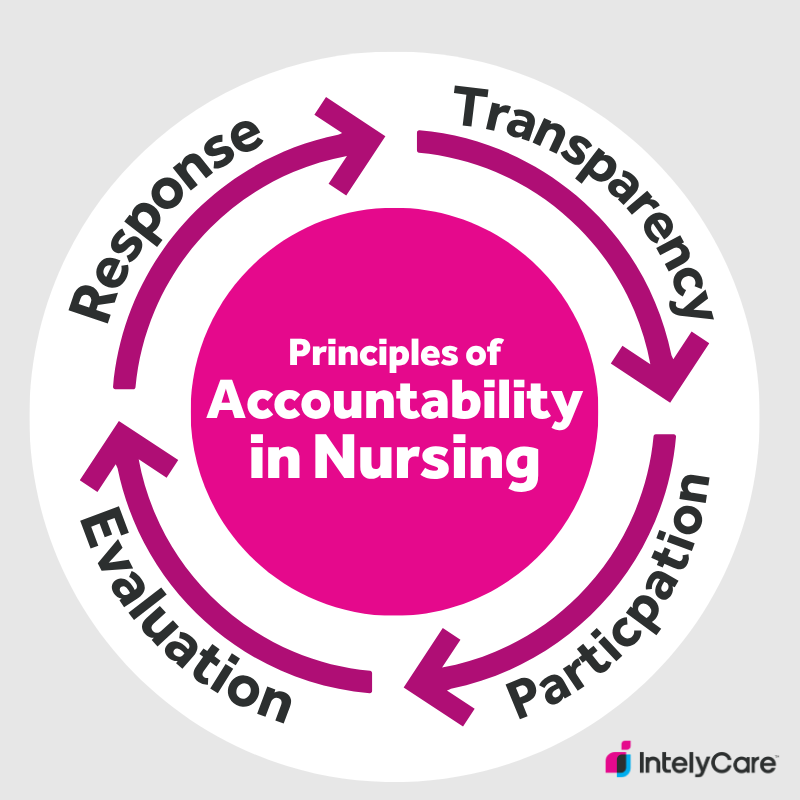
4 Pillars of Accountability in Nursing
What does this ethical principle look like in practical terms? Accountability requires four main behaviors of staff and leadership:
- Transparency: Nurses build trust by communicating clearly with patients, families, and colleagues. This includes performing a complete shift handoff, explaining care plans, documenting thoroughly, and proactively communicating mistakes or changes in a patient’s status.
- Participation: Nurses are active members of the healthcare team and patient advocates. As a nursing professional, you are accountable for participating in efforts that improve care and encourage participation from patients and families.
- Evaluation: Good nurses regularly reflect on their own practice. This may look like researching new evidence-based practices or seeking feedback from colleagues. Evaluation helps you continuously improve as a nurse.
- Response: When something doesn’t feel right, accountable nurses speak up. This may include reporting a safety concern, escalating a change in a patient’s condition, or asking for help.
Importance of Accountability in the Nursing Profession
Accountability means more than just owning up to mistakes — it’s also a cornerstone of safe, effective nursing care, and society as a whole. It means being dependable, following through on tasks, and making decisions that align with clinical standards and patient needs. When nurses take responsibility for their actions, they help protect patient safety, support trust within healthcare teams, and uphold the integrity of the profession.
Accountability helps keep care consistent. Health systems don’t work if clinicians abandon their duties and avoid communicating mistakes. In research, personal accountability is associated with better nursing performance and patient outcomes.
When nurses act with accountability, patients receive better care, coworkers can rely on each other, and the entire healthcare system functions more effectively.
7 Ways to Demonstrate Accountability in Your Practice
How can you practice accountability in nursing? Examples of accountable behaviors include:
- Admit mistakes promptly. If you make an error, report it immediately to prevent harm and support transparency.
- Follow through on responsibilities. Complete tasks you’ve been assigned, without cutting corners.
- Document care accurately. Clear, timely, and truthful documentation ensures continuity of care and legal protection.
- Ask for help when it’s needed. If you’re unsure or overwhelmed, seek guidance to protect your patients and promote safe practice.
- Stay up to date with best practices. Continue your education on evidence-based care to remain competent.
- Respect policies and protocols. Adhere to institutional guidelines to maintain safety, consistency, and professionalism.
- Advocate for your patients. Speak up when something doesn’t seem right, whether it’s a questionable order or a patient’s unspoken need.
Nurses Aren’t the Only Ones With Accountability
In nursing, workplaces have a duty to support ethical practice. If you’re looking for a new role, IntelyCare is here to help you find it. Learn more about personalized job notifications that send you the latest jobs in your specialty and location.