Nurses to Know: Isabel Hampton Robb

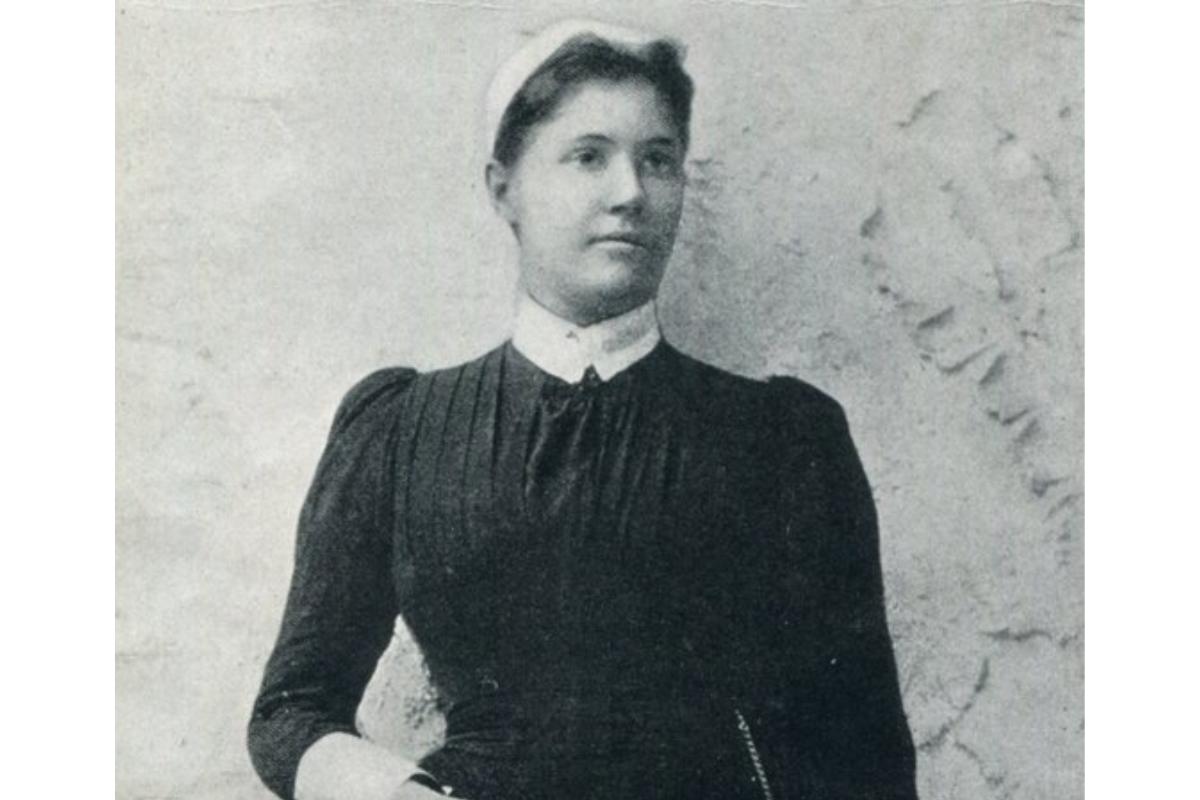
Who was Isabel Hampton Robb? A leader in 19th-century nursing, Robb revolutionized nurse training and was a founding member of both the National League for Nursing (NLN) and the American Nurses Association (ANA). She was also an author, theorist, and the first nursing superintendent at Johns Hopkins. Learn more about how Robb helped to advance nursing education.
Isabel Adams Hampton Robb: A Life Story
Early Career and Life
Isabel Adams Hampton was born in late August of 1859 in Welland, Ontario. After working as a public school teacher at 17, she began her nursing education at Bellevue Training School for Nurses in 1881 and graduated three years later. In her first job, she substituted as nursing superintendent in the Women’s Hospital in New York, then she spent two years working in Rome, Italy, at St. Paul’s House.
When she returned to the states, Robb worked briefly as a private duty nurse in New Jersey before accepting a role as superintendent of the Illinois Training School for Nursing in Chicago. She was remarkably young for the post — in her early 20s when she began — yet she found many ways to improve conditions there, and was the first to introduce a graded curriculum and teachings by Florence Nightingale.
By the time Robb left, the school was flourishing and had improved its reputation as a first-class training institution. In 1889, she moved on to Johns Hopkins in Baltimore, where she served for five years as Superintendent of Nurses and Training School Principal.
Mid-Career
During her post at Johns Hopkins, Hampton met two other nursing leaders: Lavinia Lloyd Dock and Mary Adelaide Nutting. The three women would go on to form a deep friendship and become pioneers in the quest to transform nursing into a respected profession with national education standards.
Opportunities for women were slowly expanding at this time: In 1890, with Robb present, the Women’s Fund Committee was formed at John Hopkins, calling for women’s admission into the school of medicine. In an era when most roles for women were in the home or subservient, this was a pivotal change.
In 1893, Robb authored an essential nursing textbook: Nursing: Its Principles and Practice. The book broke new ground for nursing knowledge, covering economics, hygiene, bacteria, and standardized nursing education. The book received broad praise and was considered the leading textbook in its day.
At the World’s Fair that year in Chicago, Robb led the nursing subsection. At the event, she and Lavinia Dock formed the Society of Superintendents of Training Schools, the first nurses association in the U.S. This organization would later become the National League for Nursing.
In June of 1894, she left Johns Hopkins to marry Dr. Hunter Robb, an obstetrician and gynecologist. At their wedding, she carried a bouquet sent by Florence Nightingale. The couple moved to Cleveland and had two sons.
Later Career and Death
Marriage and family didn’t keep Isabel Hampton Robb away from nursing or activism. In 1895, she joined Lakeside Hospital’s Board of Lady Managers and presented a lecture series on nursing. The next year, she became chair of the hospital’s training school committee, and would serve in this post for the rest of her life.
Robb was active in committees that urged the U.S. military to employ graduate nurses, and worked towards the establishment of the Army Nurse Corps. She also served as the first president of the National Nurses’ Associated Alumnae Association, which would go on to become the American Nurses Association. She helped form the American Journal of Nursing in 1899 and chaired the education committee of the International Council of Nurses.
In 1899, Robb, Dock, and Nutting piloted the first economics course for nurses at Columbia University Teachers College. Robb went on to author two more textbooks: Nursing Ethics in 1900 and Educational Standards for Nurses in 1907.
Sadly, Robb died after a streetcar accident in 1910. She was 49 years old. The ANA inducted Robb into their Hall of Fame in 1976.
Isabel Adams Hampton Robb: Legacy and Impact
Robb’s impact on nursing at the turn of the century was undeniable. She brought Nightingale’s teachings to the United States; nursing students and schools relied on her textbooks; and she revolutionized the ways that students were trained and evaluated.
Ethics was not part of the broader nursing conversation in the United States before Robb. She urged nurses to think critically about patient care and to act with morality. She also outlined the responsibilities of nurses, physicians, and institutions that allowed patients to experience high-quality care. This work was essential in the development of the first ANA Code of Ethics.
Robb was a model of a new way to be a woman and a nursing leader. She had a family, but this didn’t signal the end of her professional career. Indeed, Robb continued working and coming up with new ideas for improving the profession until her tragic death. She was a leader known for her practicality, innovative ideas, and ability to think outside the box to improve nursing for all.
Inspired by Isabel Hampton Robb?
Robb had a varied career that informed her advocacy work. If you’re ready for a new position, we’d love to help you find it. Sign up for personalized job notifications to learn more.
Image source: National League for Nursing