The Controversy Behind the Vietnam Nurses’ Memorial Sculpture


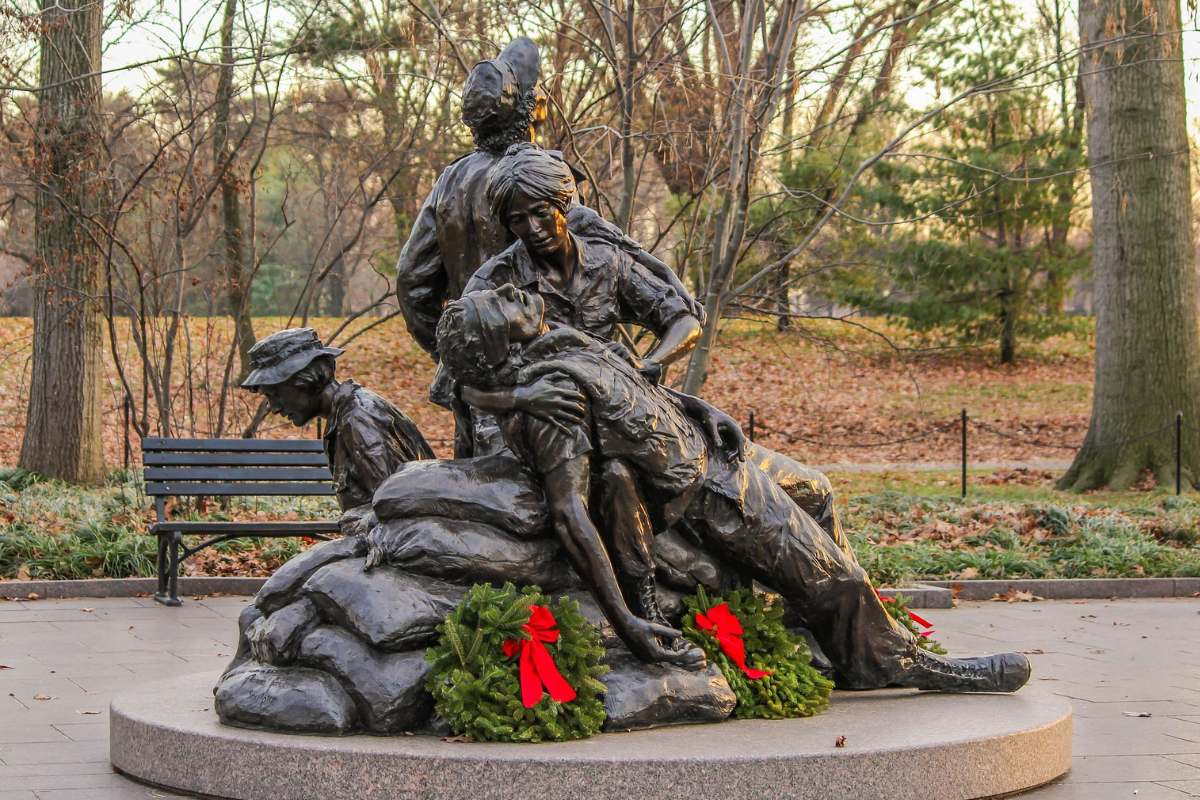
The Vietnam nurses’ memorial sculpture, officially known as the Vietnam Women’s Memorial, has long stood as both a tribute to the courage of the women who served in Vietnam and a focal point of passionate debate. While many view the statue as a long-overdue acknowledgment of the thousands of nurses who cared for soldiers during the Vietnam War, others question its placement, its artistic interpretation, and whether it disrupts the unity of the original Vietnam Veterans Memorial — the famous (and also controversial) Wall.
Want a deep dive into the Vietnam Women’s Memorial controversy? This article explores the clashes, debates, and questions that still surround this iconic tribute.
Fun Facts About the Vietnam Women’s Memorial
- First of its kind: The memorial was the first national monument on the U.S. National Mall dedicated to the service of American women in wartime.
- Represents all women who served, not just nurses: While commonly associated with nurses, the memorial was intended to honor all the 265,000 military and civilian women who served during the Vietnam era.
- Designed by a woman: Sculptor Glenna Goodacre, a highly accomplished American sculptor, was chosen to create the 6-foot-8-inch bronze figures of the nurses.
- Funded by private donations: The memorial was made possible by the campaign launched by the Vietnam Women’s Memorial Foundation (VWMF), which raised the necessary funds through donations.
- Honoring the fallen: Surrounding the sculpture are eight yellowwood trees, planted to honor the eight American servicewomen (all nurses) whose names are on the Wall.
The History of the Vietnam Nurses’ Memorial Sculpture
1. The Original Vietnam Veterans Memorial Controversy
It’s impossible to talk about the controversy behind the Vietnam nurses’ memorial sculpture without first understanding the debates that surrounded the creation of the Vietnam Veterans Memorial, of which it’s a part.
The Vietnam War came to a bitter end in 1975, with the withdrawal of U.S. forces. For many Americans, the war left deep scars — not only on the landscape of Southeast Asia but also on the hearts and minds of the veterans who returned home. Among them was Jan Scruggs, a former U.S. Army specialist struggling to adjust to civilian life. Like many returning soldiers, he experienced post-traumatic stress disorder (PTSD), and the memories of combat haunted him daily.
In 1979, after seeing the film The Deer Hunter, Scruggs experienced vivid memories of the war, also known as PTSD flashback, that crystallized his idea for a national memorial. He first shared his vision at a meeting of the Vietnam Veterans of America (VVA), proposing a 30-foot obelisk resembling a smaller version of the Washington Monument, inscribed with the names of all who died, funded entirely through private donations.
The reaction was mixed. Many members of the VVA criticized the proposal as naive or impractical, worrying that it would drain resources better used to help living veterans. Scruggs remained determined.
“The Memorial had several purposes,” Scruggs said. “It would help veterans heal. Its mere existence would be societal recognition that their sacrifices were honorable rather than dishonorable. Veterans needed this, and so did the nation. Our country needed something symbolic to help heal our wounds.”
In May 1979, he established the Vietnam Veterans Memorial Fund (VVMF), a nonprofit dedicated to creating the memorial. Scruggs devoted himself full-time to the project, raising over $8 million in private donations within a few years, and successfully lobbying Congress for authorization to build the memorial.
By 1980, just over a year after forming VVMF, Scruggs and his team secured the site on the National Mall and prepared to launch a national design competition, inviting architects and artists to propose a memorial that would honor the dead while offering a space for reflection. The contestants were required to meet three criteria:
- The memorial had to contain the names of all dead and missing.
- It had to invite reflection and contemplation.
- It had to avoid making a political statement.
The competition was anonymous, and the selection committee could only view the entries by number, without knowing the identities of the contestants.
Over 1,400 entries were submitted. The winning design, entry number 1026, was by Maya Lin, a 21-year-old undergraduate architecture student from Ohio. Her minimalist concept featured two black granite walls forming a V-shape, 246 feet long, gradually tapering at each end. The names of the fallen were engraved chronologically, reflecting the order in which each person died or went missing, without indicating rank, age, or military distinction.
“I imagined taking a knife and cutting into the earth, opening it up, an initial violence and pain that in time would heal.” — Maya Lin
From the moment Lin’s design was announced, controversy unfolded. The black stone, the V-shape, and the fact that it didn’t follow the usual elevated, heroic style set off a wave of criticism.
Traditional war memorials, like the famous Marine Corps War Memorial in Arlington, Virginia, often feature tall statues of soldiers in action, dramatic poses, or waving elements such as swords or flags. Visitors usually look up at them, feeling the scale and power of the figures. The style is celebratory, emphasizing heroism in a very visual, almost theatrical way.
Lin’s Wall, in contrast, sits low, minimalist, and confronts visitors with the names of the dead at eye level. Its reflective surface lets people see themselves alongside the names, creating a personal, contemplative experience.
Opponents objected to its lack of decoration or statuary, its placement below ground, and above all, its black color. Even supporters, such as Secretary of the Navy Glyn Webb, later criticized the memorial, calling it “a nihilistic slab of stone.” The chronological listing of names, without military distinctions or rank, also disturbed some people.
Lin’s age and experience were questioned, and the design drew criticism from public figures, including Ross Perot. At one point, Secretary of the Interior James Watt delayed the permit process, requiring Lin to defend her design before Congress. Eventually, the memorial project received its final permit — but only with conditions. The VVMF was required to add two things: a realistic, heroic-style statue and a flagstaff.
2. The Addition of a Three Soldiers Statue Controversy
Another controversial statue that preceded the Vietnam nurses’ memorial sculpture, was the Three Soldiers statue by Frederick Hart, a sculptor known for his classical, idealized style. The initial plan was to place Hart’s statue right at the apex of Lin’s Wall, which would have turned it into the main focal point of the memorial. To many supporters of the Wall, this felt like an attempt to overshadow or even “correct” Lin’s design rather than complement it.
Lin herself called the decision to add the statue “a coup” and said it had “nothing to do with how many veterans liked or disliked my piece.” She also pointed out that she had never received a single critical letter from a Vietnam veteran — only from politicians, activists, and commentators.
Eventually, a compromise was reached once again: The sculpture would be placed in the entry plaza, about 150 feet away. This kept the Wall’s quiet, reflective space intact while still giving critics the traditional imagery they wanted.
The finished sculpture depicts three servicemen of different ethnic backgrounds — including an African-American soldier. It became the first representation of an African-American man on the National Mall, marking a significant moment in the site’s history.
On March 11, 1982, Lin received the final federal approval and a building permit was granted.The Wall itself was finished in late October 1982 and formally dedicated on November 13, 1982.
Interesting fact: While Lin received $20,000 for her winning design, Hart was paid more than $300,000 for his work on the memorial.
3. The Addition of the Vietnam Nurses’ Memorial Sculpture
After the installation of the Wall and theThree Soldiers, many veterans and nurses felt that one group was still missing from the country’s public memory of the Vietnam War: the women who served. Around 11,000 American women went to Vietnam, and the vast majority of them were nurses.
While the Vietnam Veterans Memorial lists over 58,000 names, only eight belong to women. Many argued that this overlooked the broader contributions of the 265,000 American women who served during the war. Their work spanned healthcare, communications, intelligence, and administrative roles, while civilian women contributed as foreign correspondents, Red Cross and United Service Organizations (USO) workers, and government employees.
In 1982, Diane Carlson Evans, a former U.S. Army nurse in Vietnam, grew frustrated by the male-focused narrative of the memorial. She founded the Vietnam Women’s Memorial Project (later the Vietnam Women’s Memorial Foundation) in 1984 to create a dedicated tribute to the thousands of women who served.
In addressing the role of women in the war, Evans said, “…women are also soldiers. Women also need to heal. Their service is worthy of honor and recognition.”
Critics pushed back, claiming another sculpture would reopen old arguments about design and symbolism. Other influential figures in Washington even argued that women’s contributions in Vietnam didn’t merit a separate memorial — that their service wasn’t “significant enough” for a place on the Mall.
Even Maya Lin initially opposed the idea, saying: “In allowing that addition, you substantiate this assumption that our national monuments can be tampered with by private interest groups years after the monuments have undergone the proper legal and aesthetic approval processes.”
Despite resistance, Evans persisted for nearly a decade — lobbying Congress, speaking publicly, raising funds, and emphasizing that recognizing women’s service was not political, but historical. After several design rejections and years of debate, the project was finally approved.
The chosen artist, Glenna Goodacre, created a bronze sculpture showing three women and a wounded soldier. Unlike Hart’s stylized, idealized figures, Goodacre’s composition emphasized caregiving and emotional weight. One nurse looks upward, calling for help; another cradles a wounded soldier; the third kneels in anguish beside a stack of sandbags. The scene captured the reality nurses described — a mix of exhaustion, urgency, teamwork, and grief.
Even after the Vietnam Women’s Memorial was installed and dedicated on November 11, 1993, controversy lingered. Some critics argued that the statue was historically inaccurate — for example, female nurses in Vietnam were primarily stationed in military hospitals, not on the frontlines, so the scene of nurses tending a wounded soldier in the field was seen by some as dramatized. However, veterans and nurses who served in Vietnam praised the memorial for finally acknowledging their service and sacrifices.
Why the Vietnam Nurses’ Memorial Sculpture Became a Battleground of Its Own
War is, by its nature, one of the most controversial human experiences. Some view it as heroic, others as devastating, and many hold a blend of both perspectives. So, it’s hardly surprising that creating a Vietnam nurse’ memorial sculpture raised difficult questions. How do you honor thousands of lives when their names on the plate are all that remain? What should a memorial express — tragedy, heroism, healing, or reflection?
The Wall had already survived a major aesthetic battle during its creation, and opponents worried that every new addition — first The Three Soldiers, then the Vietnam Women’s Memorial — would chip away at the simplicity and power that made the site so moving. Others objected for political or cultural reasons. And still others questioned whether the scene was historically precise.
But for the women who served, these arguments missed the point. Some of them felt invisible in the public memory of the war, and the memorial finally gave them a place to stand, gather, and be seen.
Your Service Matters. Discover Quality Nursing Roles.
Inspired by the story behind the Vietnam nurses’ memorial sculpture? Let IntelyCare help you build your career in this noble profession. We can connect you with high-quality opportunities in your preferred specialty and location. Start your journey today.
Photo by James DeMers.