Nurses to Know: Mabel Keaton Staupers, Civil Rights Pioneer for Black Nurses in the Military

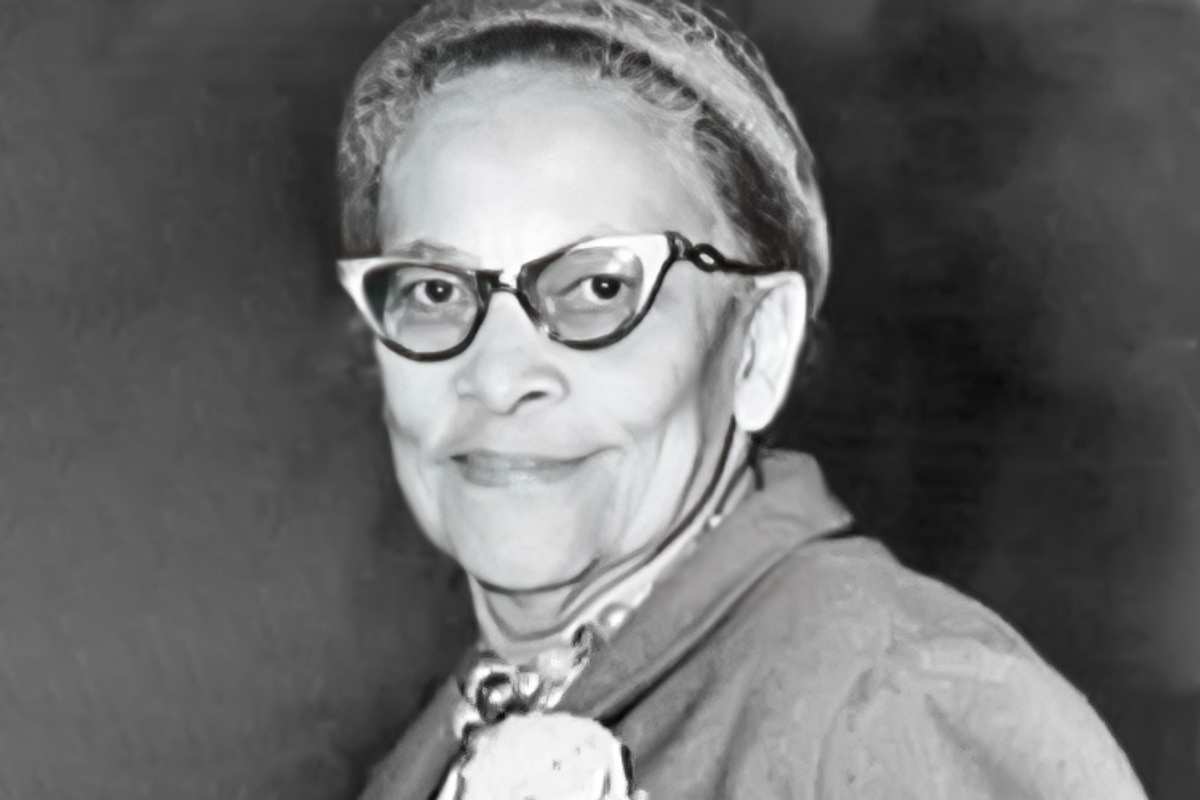
Mabel Keaton Staupers was a nurse at a time when Black professionals were systematically excluded from hospitals, nursing organizations, and even from caring for soldiers during wartime — and what she accomplished was truly remarkable. She didn’t just challenge racial barriers in healthcare; she helped open hospitals and the U.S. military to Black nurses during World War II.
But how did one woman challenge a system built on segregation and succeed? And how does Mabel Keaton Staupers continue to shape healthcare today? This article explores her story, legacy, and why her work continues to matter today.
Who Is Mabel K. Staupers?
Early Life
Mabel Keaton Staupers (née Doyle) was born on February 27, 1890, in Barbados to Thomas Clarence Doyle and his wife, Pauline. When Mabel was just thirteen years old, she moved to New York City together with her mother, leaving behind the familiar rhythms of island life in search of opportunity. A few years later, her father followed, reuniting the family in their new home.
After gaining U.S. Citizenship in 1917, Mabel graduated with honors from Freedmen’s Hospital School of Nursing in Washington, DC. That pivotal year also marked her marriage to James Max Keaton, a union that would eventually end in divorce but leave her known to history by the name she carried forward.
Early Career
After completing her nursing training, Mabel Keaton began working as a private-duty nurse in New York and Washington, DC. It was there that she witnessed firsthand how racial discrimination limited not only the care available to Black patients but also the opportunities for Black nurses to practice their profession fully.
In 1920, determined to create real change, she joined forces with Black physicians Louis T. Wright and James Wilson to help organize the Booker T. Washington Sanitarium in Harlem. This was one of the first inpatient facilities where Black doctors and nurses could provide care to Black patients, with a special focus on tuberculosis, a major public health issue at the time.
From 1922 to 1934, Mabel served as executive secretary of the Harlem Committee of the New York Tuberculosis and Health Association. In this role, she conducted surveys and developed community health programs aimed at improving tuberculosis care for the Black community.
In 1931, she married again — this time to Fritz C. Staupers, a New York resident. From this marriage, she took the name Mabel Keaton Staupers, the name she is most widely known by in historical accounts of her work and advocacy. Her second marriage lasted until Fritz Staupers’ death in 1949.
Leadership and Advocacy
In 1934, Staupers stepped into a groundbreaking role as the first paid executive secretary of the National Association of Colored Graduate Nurses (NACGN). Founded in 1908, the organization existed to support Black nurses who were largely excluded from mainstream professional associations. At that time, organizations like the American Nurses Association (ANA), often barred Black nurses from membership and professional opportunities, creating significant barriers for those striving to advance in the field.
In her new role, Staupers expanded the NACGN’s reach, built powerful coalitions, and tirelessly campaigned for equal educational opportunities, fair employment, and full professional recognition for African American nurses. Through her leadership, the organization evolved from a small support network into a formidable force for change, opening doors that had long been closed to Black professionals.
World War II
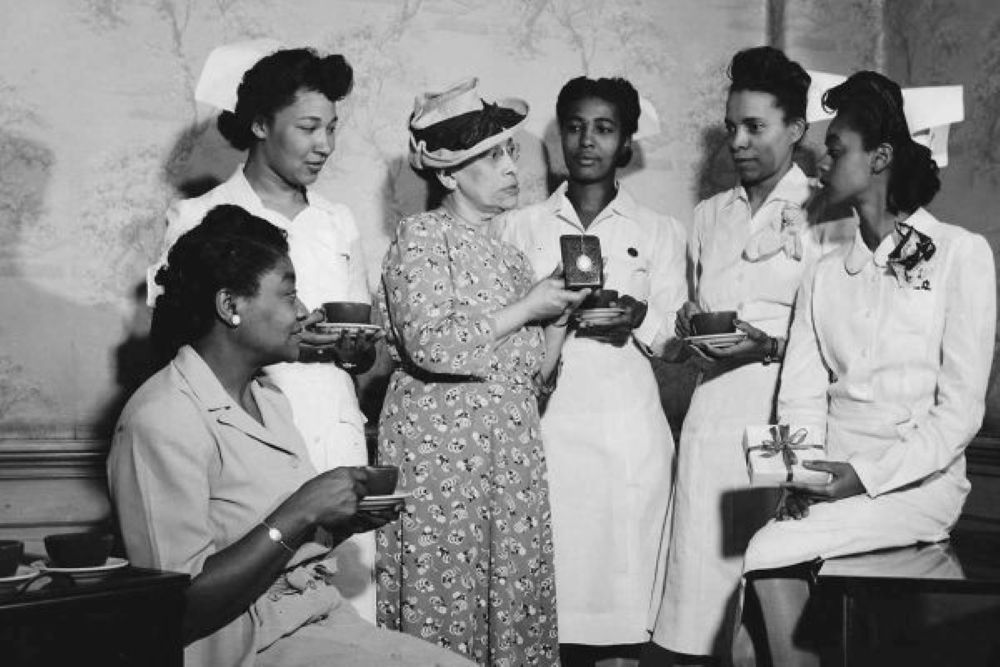
During World War II, Staupers stepped onto the national stage with a major fight: integrating Black nurses into the U.S. Army Nurse Corps and later the Navy’s nursing services. Early in the war, strict quotas allowed only a small number of Black nurses to serve, and many were assigned only to segregated units.
Refusing to accept this injustice, Staupers launched a bold campaign for change. She organized a nationwide letter-writing effort, rallied support from civil rights organizations, and even met with First Lady Eleanor Roosevelt to expose the unfairness of denying qualified Black nurses their rightful roles during a time of desperate need. Her strategic vision and unyielding determination turned a deeply entrenched barrier into a national conversation.
The results were historic: By January 1945, the Army and Navy lifted their racial quotas, opening the doors to all qualified nurses, regardless of race. Staupers’ victory was more than a single achievement — it was a decisive early step in the larger struggle for desegregation in the U.S. military.
Later Work
After her groundbreaking success in integrating Black nurses into the military, Mabel Keaton Staupers didn’t stop there. She kept pushing for equality within the nursing profession, and in 1948, her efforts helped the ANA finally open its doors to African American nurses.
With that goal achieved, the NACGN made the remarkable decision to dissolve in 1951, confident that the organization had fulfilled its mission. That same year, Staupers’ tireless work and leadership were honored with the Spingarn Medal from the National Association for the Advancement of Colored People (NAACP), one of the organization’s highest honors.
Staupers documented her experiences and the struggle for equality in her 1961 autobiography, No Time for Prejudice: A Story of the Integration of Negroes in Nursing in the United States, preserving this important history for future generations.
What Did Mabel Keaton Staupers Do? Continued Legacy
As a true leader, she continued to be involved in advocacy throughout her life. Her influence can be seen in the careers of Black nurses who rose to leadership positions in military and civilian healthcare, such as Hazel Johnson-Brown, a female general and first Black chief of the Army Nurse Corps.
Staupers passed away in 1989 at the age of 99, leaving behind more than a record of groundbreaking achievements. She left a legacy of mentorship, inspiration, and a lifelong commitment to opening doors for Black nurses and improving healthcare access for underserved communities.
In 1996, she was posthumously inducted into the ANA Hall of Fame for her lasting impact on nursing and civil rights.
Get Inspired by Famous Nurses
Want to learn about more nurses who made history? Check out our articles on these remarkable figures:
- Adah Belle Thoms
- Susie King Taylor
- Clara Barton
- Edith Cavell
- Florence Nightingale
- Harriet Tubman
- Mary Eliza Mahoney
- Mary Seacole
- Susie Walking Bear Yellowtail
Build Impactful Nursing Career With IntelyCare
Inspired by Mabel Keaton Staupers? Turn inspiration into action with IntelyCare. Discover quality nursing roles where your needs matter, your skills can shine, and help you grow on your own terms through our personalized job search.