Assisted Living vs Nursing Home: What’s the Difference?

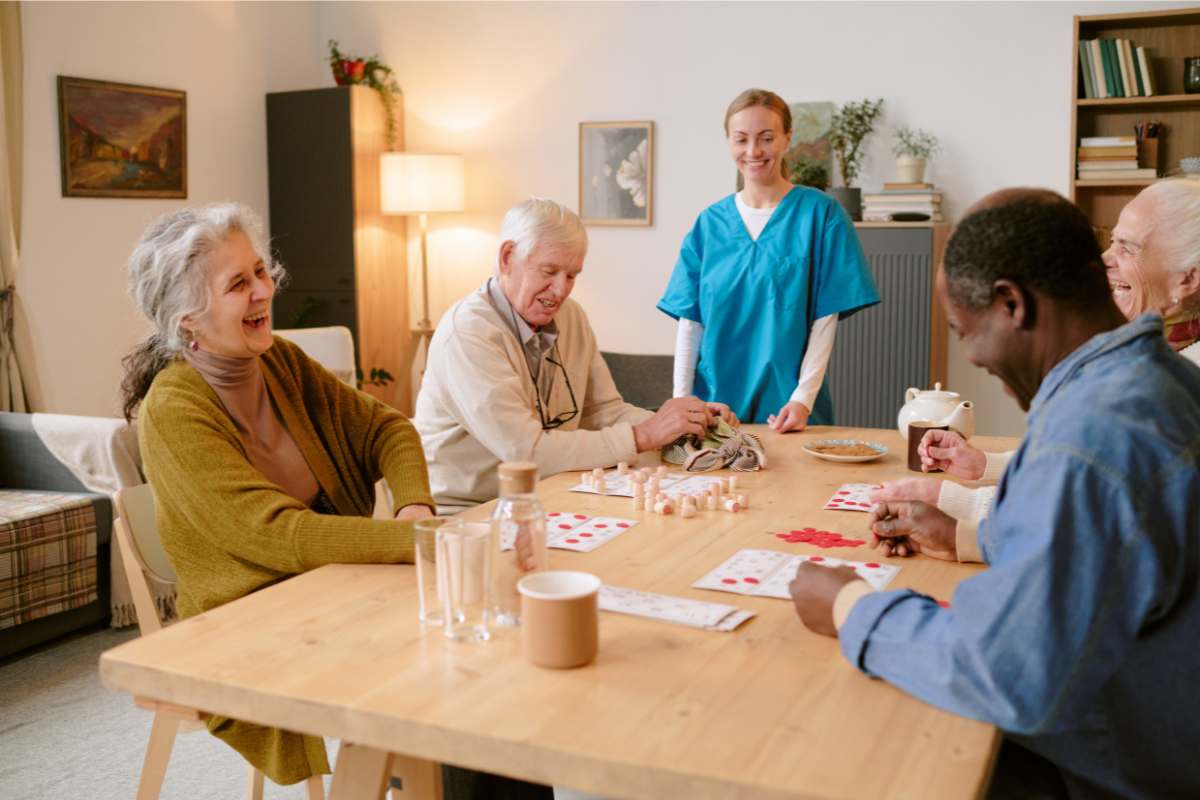
Are you trying to decide between assisted living vs. nursing home roles as a nurse? While assisted living emphasizes resident independence, medication support, and a more social, home-like environment, nursing homes provide 24/7 skilled care for higher-acuity patients. Knowing how these settings differ can help nurses align their clinical skills, pace preferences, and career goals with the right workplace.
Get a clear understanding about the difference between the assisted living facility vs. nursing home with our complete guide — explaining care, staffing, and daily life in each setting.
What Is Assisted Living vs. Nursing Home?
When comparing assisted living facilities and nursing homes, the core difference lies in the level of medical support needed for the residents and the degree of autonomy they maintain.
Assisted Living Facilities
An assisted living facility is a long‑term care community designed to help residents with activities of daily living (ADLs) such as bathing, dressing, and medication management while allowing them to maintain as much independence as possible. These communities emphasize a residential, home-like setting where older adults live in private or shared apartments, often with common spaces for dining and social activities.
Because assisted living is all about preserving autonomy, residents do not usually require 24/7 medical care or skilled nursing interventions. Instead, they receive help on demand.
Assisted living is regulated by state authorities, not the federal government.They are not covered by Medicare, although some long‑term care insurance or state Medicaid waivers may help with certain services.
Nursing Homes
A nursing home provides continuous, around‑the‑clock medical care for people who are unable to live independently due to complex health conditions or disability. In addition to assistance with ADLs, nursing homes offer 24/7 medical supervision, structured medical services on‑site, and rehabilitation services such as physical, occupational, and speech therapy.
Nursing homes are regulated under both state and federal law, and must meet uniform standards — often including staffing requirements and medical programming that assisted living does not have.
While Medicare does not pay for long‑term nursing home care, it may cover short‑term skilled care after a hospital stay if certain conditions are met.In contrast, Medicaid may cover long‑term nursing home care for individuals who qualify based on income and medical need.
Organizational Structure: Assisted Living vs. Nursing Home
Assisted living facilities typically have a less clinical, more flexible organizational structure. These facilities resemble homes, and are built to feel cozy and welcoming. Staffing levels can vary depending on the state, the number of residents, and the price point (luxury vs. standard setting), along with other factors.
While the exact organizational structure differs from one facility to another, assisted living communities typically include the following key roles:
- Administrator: Oversees overall strategy for the organization.
- Executive director: Responsible for day-to-day operations, compliance with state regulations, staffing decisions, and budgeting.
- Medical director (often nurse practitioners or other advanced practice nurses): Provides clinical oversight and coordinates care strategy; not always present in smaller communities.
- Medical staff: Provide resident assessments, medication support, and health monitoring; may be on-site or on a visiting/on-call basis.
- Caregivers or personal aides: Assist residents with ADLs such as bathing, dressing, eating, and mobility, as needed.
- Activities coordinators: Manage recreational, social, and wellness programs.
- Support services: Ensure meals, cleanliness, safety, and operational support of the facility.
Nursing homes are structured more like healthcare organizations, with clear clinical hierarchies and regulated staffing standards. While the exact hierarchy may vary by facility, nursing homes typically include the following roles:
- Chief executive officer: Oversees organizational governance, policy development, and long-term strategy.
- Executive director: Manage budgeting, payroll, human resources, and administrative operations.
- Administrator: Responsible for day-to-day operations, regulatory compliance, and coordination across departments.
- Director of care: Oversees all nursing services, clinical standards, and supervision of nursing staff.
- Clinical nurse manager: Leads the nursing team, coordinates care delivery, and monitors clinical outcomes.
- Attending physicians: Provide medical oversight, direct treatment plans, and manage complex medical conditions.
- Nursing staff: Deliver hands-on clinical care, perform assessments, administer medications and treatments, and coordinate care.
- Nursing assistants: Assist residents with ADLs, observe and report changes in condition, and provide direct bedside support.
- Therapists: Provide therapies (e.g., physical, occupational, and speech) to support rehabilitation or maintenance of function.
- Activities coordinator: Manages wellness programs for residents.
- Support services (maintenance, housekeeping, kitchen staff): Responsible for daily operations, cleanliness, meals, and maintenance.
Choosing a Workplace: Nursing Home vs. Assisted Living
For nurses weighing job options, understanding the differences in responsibilities, pace, and professional challenges between assisted living and nursing homes is essential. Here’s the breakdown of important factors to consider when choosing a place of employment.
| Factors to Consider | Assisted Living | Nursing Home |
|---|---|---|
| Resident acuity | Low to moderate; residents may need help with ADLs but not 24/7 medical care | Moderate; residents need 24/7 medical care |
| Typical residents | Seniors who are mostly independent but may need support with daily activities, uncomplicated medical care, and socialization | Seniors with chronic conditions or recovering from hospital stays |
| Examples of responsibilities | Medication reminders, assisting with ADLs (bathing, dressing, meals), coordinating social activities, health check-ins | Administering medications and treatments, wound care, IV therapy, monitoring vital signs, rehab therapy support, managing complex medical needs |
| Pace of work | Slower; predictable routine on most days | Higher; some cases requiring urgent interventions or rapid response |
| Patient interaction | Strong focus on building long-term relationships | Focus on clinical care |
| Work environment | Home-like | Clinical, structured, and health-focused |
Assisted living can be a great fit for nurses who:
- Enjoy relationship-focused care: You want to build meaningful connections with residents over time, promoting independence and quality of life.
- Prefer a slower pace of work: You thrive in an environment with fewer medical emergencies and a routine you can anticipate.
- Are comfortable with limited acute care experience: Residents rarely require complex interventions like IVs or advanced wound care.
Nursing homes can suit nurses who:
- Want to keep your clinical skills sharp: You are seeking a workplace where you can build essential nursing skills, such as administering IV therapy, providing wound care, and performing head-to-toes assessments.
- Prefer fast-paced work: You thrive in mentally and physically stimulating environments, where you may need to respond to emergencies, changes in vital signs, or address other urgent medical needs.
- Enjoy working in multidisciplinary teams: You enjoy collaborating closely with physicians, therapists, and other healthcare professionals.
Professional Development Opportunities
Another important factor to consider when choosing a workplace is whether it aligns with your long-term career goals. Each setting offers unique opportunities for professional learning and advancement along the clinical ladder.
| Assisted Living | Nursing Home |
|---|---|
| Offers a chance to develop soft skills, such as active listening, therapeutic communication, and compassionate care.
Allows nurses to gain experience in organizing and overseeing activities like wellness programs, recreational therapy sessions, and senior fitness classes. Provides opportunities to be promoted to leadership or management roles within the same facility or similar one. |
Enables nurses to strengthen clinical skills in areas such medication management and rehabilitation oversight.
Can be a stepping stone to specialized roles such as geriatrics, medical-surgical nursing, or rehabilitative care. Builds experience that qualifies nurses for charge nurse, MDS coordinator, or director of nursing (DON) roles due to exposure to federal regulations, staffing oversight, and clinical documentation requirements. |
Want to Love Your Job? We Can Help
Whether you’re exploring assisted living vs nursing home roles, we provide access to quality nursing jobs that match your skills, experience, and lifestyle. Sign up for a personalized job search experience that puts your priorities first.